Nahcolite with Borax + Thenardite - Antarctica
Brand : Jensan Scientifics LLC
- SKU:
- JPT-29748
- Availability:
- Usually ships in 24 hours.
- Weight:
- 1.00 LBS
- Minimum Purchase:
- 1 unit
- Maximum Purchase:
- 1 unit
- Gift wrapping:
- Options available
- Shipping:
- Calculated at Checkout


Nahcolite, Borax & Thenardite, Antarctica
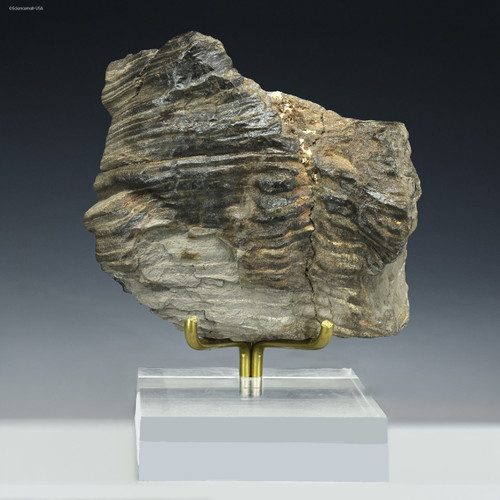
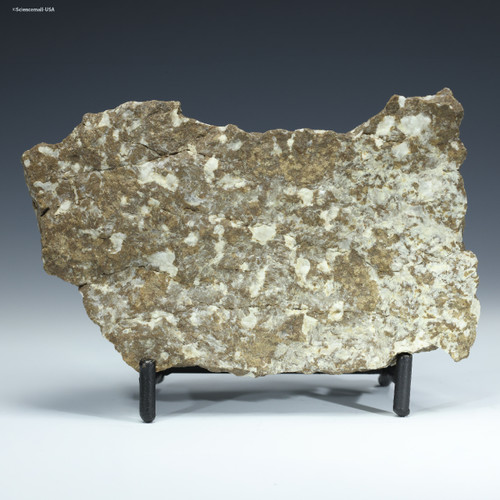
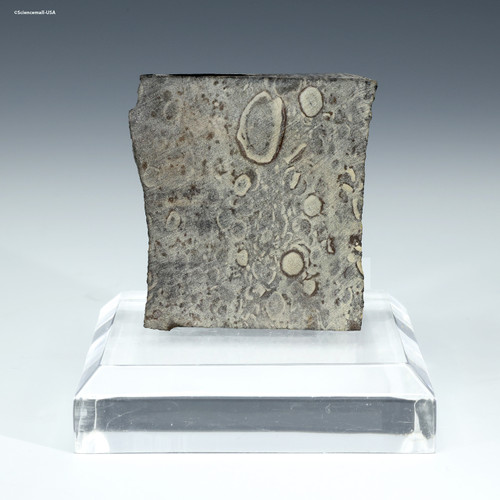
This nahcolite, borax, and thenardite specimen came from the Lewis Cliff Ice Tongue in the Buckley Island Quadrangle of Antarctica, where natural salts crystallized around supraglacial melt ponds 17,000 to 9,000 years ago. It was legally collected in the mid-1980s, before the Antarctic Treaty's Environmental Protocol, making it a rare chance to own an evaporite mineral specimen.
About This Antarctic Evaporite Specimen
Evaporites are minerals left behind when salty water dries up or freezes out. Most form in hot deserts and salt lakes. These formed on ice, deep in the Transantarctic Mountains.
- Nahcolite is natural sodium bicarbonate, the same compound as baking soda.
- Borax is a sodium borate, the same mineral used for centuries as a cleaning agent and flux.
- Thenardite is natural sodium sulfate, a classic mineral of dry, salty environments.
- During brief summer melts, small ponds formed on the glacier surface. The water picked up salts from rock debris, then evaporated and froze away, leaving these crystals behind.
- The specimen shows glassy bladed and needle-like crystals woven through bright, snow-white masses, with additional evaporite minerals that have not been formally identified.
How Do Evaporite Minerals Form on a Glacier?
Picture a gravel-covered patch on top of the ice, not a clean white glacier.
At the Lewis Cliff Ice Tongue, the glacier carries rocks, sand, and dust and dumps them on its surface along a band of rubble called a moraine. The salts form within that rubble, in five steps:
- Dark rock soaks up sun. During the 24-hour summer daylight, the rubble absorbs heat much better than white ice does. The ice touching the warm rocks melts a little.
- Small ponds form. The meltwater collects in shallow puddles and ponds in low spots between the rocks, sitting right on the ice.
- The water picks up salt. As it soaks through the debris, it dissolves small amounts of salt. That salt comes mostly from sea spray carried inland on the wind and from slowly weathering rock.
- The water leaves, the salt stays. Antarctic air is among the driest on Earth, so the ponds steadily evaporate. Freezing helps too: when salty water freezes, the ice is mostly fresh, which squeezes the salt into the shrinking pool of liquid.
- Crystals grow. Once the brine is too concentrated to hold its salt, minerals like nahcolite, borax, and thenardite crystallize along the pond edges and through the rubble.
Product Information
| Preparation | Natural specimen with original crystal surfaces, as collected |
| Dimensions and Weight | 118 mm L x 77 mm W x 58 mm D, 220 g |
| Science Gift Options | A memorable gift for mineral collectors, polar science enthusiasts, Antarctic expedition veterans, chemistry and earth science educators, and anyone fascinated by how minerals form in extreme places |
| What's Included | Specimen, Certificate of Authenticity (COA), information sheet, specimen tag, tag stand, dessicant (display base & brass scale cube not included) |
| Legality | Legally collected in the mid-1980s, prior to the Antarctic Treaty's Protocol |
| Provenance and Authenticity | All of our material is proprietary and sourced from scientists and/or verified scientific estate collections, backed by the included Certificate of Authenticity. |
Images professionally photographed under controlled studio lighting using Zeiss optics and a pro-grade Canon camera, for guaranteed accuracy. The brass scale cube measures 1 cm per side.
Rarity and Significance
| Scientific Significance | ★★★★☆ |
| Locality Uniqueness | ★★★★★ |
| Rarity | ★★★★★ |
| Market Availability | ☆☆☆☆☆ |
| Historical Importance | ★★★★☆ |
| Display Appeal | ★★★★☆ |
Questions Commonly Asked About Antarctic Evaporite Minerals
How can salt minerals form on a glacier?
Antarctic summers can warm dark rock debris on the ice just enough to create small meltwater ponds on the glacier surface. That water dissolves salts from the surrounding rock and dust.
In Antarctica's extremely dry, cold air, the ponds slowly evaporate and freeze away. The dissolved salts are left behind as crystals, much like the white crust that forms around a dried-up desert lake.
How old are these minerals?
The Lewis Cliff Ice Tongue evaporites formed 17,000 to 9,000 years ago. That window covers the end of the last ice age, when Earth's climate was shifting from glacial to the warmer conditions we live in today.
Is it legal to own an Antarctic mineral specimen?
Yes, when it was collected legally. This specimen was legally collected in the mid-1980s, before the Antarctic Protocol Treaty, adopted in 1991.
What does "unidentified evaporite minerals" mean?
Natural salt deposits rarely hold just one or two minerals. Alongside the nahcolite, borax, and thenardite, this specimen contains other evaporite minerals that have not been formally identified by laboratory analysis.
How should I care for this specimen?
These minerals dissolve in water. Never wash or wet the specimen and keep it in a closed display case away from humidity, kitchens, and bathrooms.
Handle it gently with dry hands and wash your hands afterward. Borax should not be swallowed, so keep the specimen out of reach of small children and pets.
Brilliant snow-white masses and sparkling glassy needles give this Antarctic specimen striking presence from every angle. Born from meltwater ponds on a glacier at the end of the last ice age, it is a bold, sculptural piece of polar mineralogy that very few collections will ever own.