Antarctic Wood Transantarctic Mountains, Antarctica
Brand : Jensan Scientifics LLC
- SKU:
- JPT-781128
- Condition:
- New
- Availability:
- Usually ships in 24 hours.
- Weight:
- 1.00 LBS
- Minimum Purchase:
- 1 unit
- Maximum Purchase:
- 1 unit
- Shipping:
- Calculated at Checkout


Triassic Antarctic Fossil Wood, Fremouw Formation
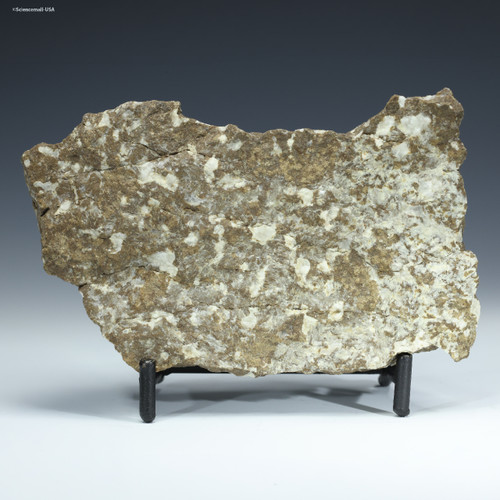
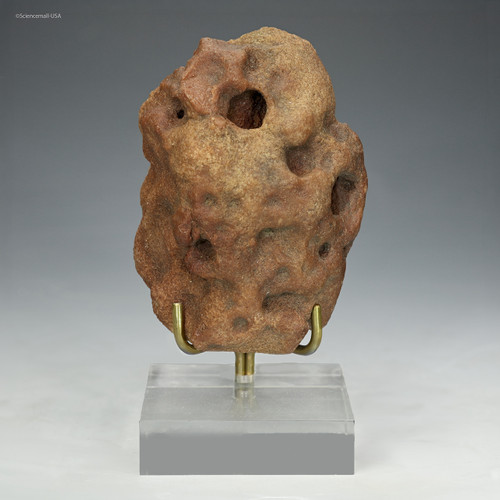
This fossil wood grew in a forest near the South Pole about 245 million years ago, when Antarctica had no ice and was part of the supercontinent Gondwana. It comes from the famous Fremouw Formation in the Central Transantarctic Mountains and is a tangible piece of one of the most unusual forests in Earth's history.
Notice: This specimen came from a scientific collection and was legally collected in the 1980s, before the Madrid Protocol took effect.
About This Antarctic Wood
During the Middle Triassic, Antarctica sat at nearly the same polar latitude it occupies today. The climate was a greenhouse world, though, and dense forests grew along the river floodplains. Those trees had to live through months of continuous summer daylight followed by months of total winter darkness. The Fremouw Formation preserves this ecosystem in extraordinary detail. It includes stumps still standing where they grew and silicified peat that holds cellular-level anatomy.
The dominant trees were corystosperms. These were extinct seed ferns that carried the leaf type Dicroidium, the signature foliage of the Southern Hemisphere during the Triassic. This specimen shows dense, parallel woody grain that curves around what appears to be a knot or branch junction. Its preservation is a mix of mineral and carbonaceous material, so it is part stone and part ancient carbon. Based on its locality and the Fremouw flora, it is attributed to corystosperm wood of the genus Kykloxylon.
Product Information
| Preparation | All-natural specimen with original surfaces, showing woody grain and mixed mineral and carbonaceous preservation; No repairs |
| Dimensions and Weight | 65 mm L x 56 mm W x 35 mm H, Weight:108 g |
| Science Gift Options | A memorable gift for paleobotany and fossil collectors, polar science enthusiasts, Antarctic expedition veterans, geology and earth science educators, and anyone fascinated by the polar regions |
| What's Included | Certificate of Authenticity, specimen tag, tag stand, article handout "The Polar Forests of Triassic Antarctica"; Free Shipping in the USA, Free Poster of your choice at checkout |
| Provenance and Authenticity | All of our material is proprietary and sourced from scientists and/or verified scientific estate collections, backed by the included Certificate of Authenticity. This specimen came from a scientific collection and was legally collected in the 1980s, before the Madrid Protocol took effect |
Images are professionally photographed under controlled studio lighting using Zeiss optics and a pro-grade Canon camera, for guaranteed accuracy.
Rarity and Significance
| Scientific Significance | ★★★★★ |
| Market Availability | ★☆☆☆☆ |
| Locality Specificity | ★★★★★ |
| Display Appeal | ★★★★☆ |
| Educational Value | ★★★★★ |
Questions Commonly Asked About Antarctica's Triassic Forest
How could a forest grow in Antarctica?
In the Middle Triassic, Antarctica was the heart of the supercontinent Gondwana, joined to Africa, India, South America, and Australia. It sat at a high polar latitude of roughly 70 to 75 degrees south, not far from where it is now. The difference was the climate.
The Triassic was a greenhouse world with no polar ice caps. Cool, humid conditions allowed forests to grow along rivers and floodplains well inside the polar circle. Nothing like them exists anywhere on Earth today.
How did trees survive months of darkness?
At that latitude, the trees had continuous daylight through the summer and total darkness through the winter. The fossil wood records how they coped. Its growth rings show fast growth during the light season, then an abrupt stop as winter arrived.
Thick mats of fossil leaves found around the stumps suggest the trees were deciduous. They likely dropped their foliage and went dormant through the polar night, a survival strategy with no exact modern equivalent.
What kind of tree was this?
The Fremouw forests were dominated by corystosperms, a group of extinct seed ferns that grew as true trees. Their forked leaves, called Dicroidium, are the most characteristic plant fossil of the Southern Hemisphere during the Triassic.
Corystosperm wood from the Fremouw Formation was named Kykloxylon fremouwensis in 1993. Later research assigned large, anatomically preserved trunks from Fremouw Peak to the same genus. Corystosperms disappeared by the end of the Triassic and left no living descendants.
Why does the tag list a "possible" genus and species?
A definitive genus- or species-level identification of fossil wood requires microscopic thin sections. These show the growth rings, cell-wall pitting, and ray structure that separate one wood type from another.
This specimen has been kept intact rather than cut for sectioning. Its attribution is therefore based on its locality, its visible woody structure, and the known composition of the Fremouw flora, where corystosperm wood predominates. "Possible" is the scientifically best way to state it.
What animals lived in Antarctica during the Triassic?
The Fremouw Formation is also famous for its vertebrate fossils. In 1969, the lower, slightly older part of the formation yielded bones of Lystrosaurus, a stocky, plant-eating mammal relative already known from South Africa and India.
Finding the same animal on the frozen continent was a landmark moment. It strongly supported the idea that the southern continents were once joined as Gondwana, helping confirm continental drift and plate tectonics.
How did the wood turn to stone?
Trees and branches were buried by river sediment. Mineral-rich groundwater then seeped through the buried wood, depositing minerals within and around the plant cells. This permineralization preserved the wood's original structure.
In this specimen, some of the original carbon survived alongside the minerals. It is a partial window into the living tree. Elsewhere in the formation, silicified peat preserves plant tissue so finely that roots, spores, and even fungi can be studied under the microscope.
This Triassic wood came from a forest that grew near the South Pole, in a world without ice. A very rare and remarkable specimen from one of Earth's most remote localities, it arrives ready to display with its Certificate of Authenticity, specimen tag, tag stand, and our article handout, "The Polar Forests of Triassic Antarctica."