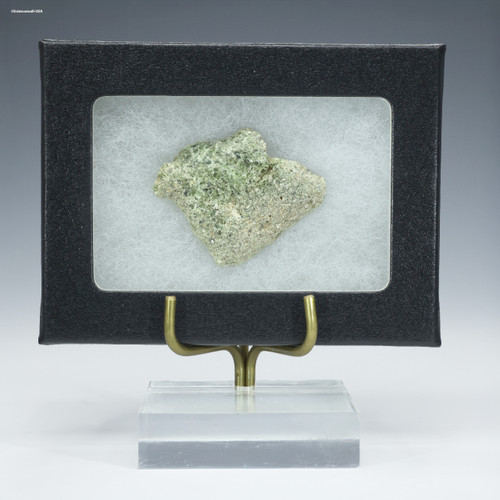
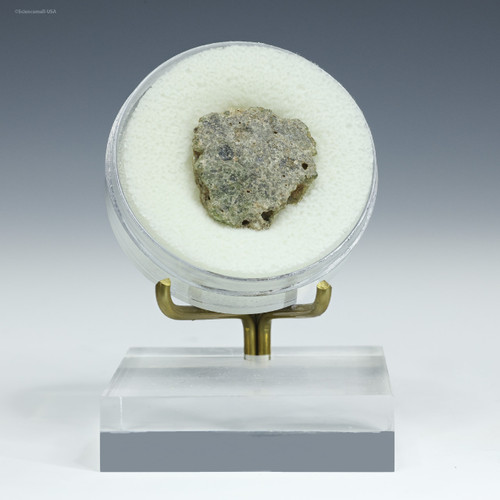
Trinitite Green Red Atomic Glass - 1.9 grams
Brand : Jensan Scientifics LLC
- SKU:
- JPT-12739
- Condition:
- New
- Availability:
- Usually ships in 24 hours.
- Weight:
- 1.00 LBS
- Minimum Purchase:
- 1 unit
- Maximum Purchase:
- 1 unit
- Shipping:
- Calculated at Checkout


Trinitite Green Red Atomic Glass - 1.9 grams
This authentic green and red Trinitite atomic glass is a genuine artifact from the Trinity Test, the first nuclear detonation, conducted near Alamogordo, New Mexico, on July 16, 1945. This 1.9-gram specimen preserves the vesicular glass texture associated with nuclear-formed desert glass and includes a Certificate of Authenticity, educational information, a tag stand, and XRF information.
Trinitite Green Atomic Glass, Alamogordo, New Mexico
Trinitite, also known as Trinity glass or Alamogordo glass, formed when the Trinity detonation fused desert sand and associated materials into green vesicular glass. This specimen is green red Trinitite.
Trinitite Geological and Historical Significance
Trinitite is one of the most historically important artificial glasses ever formed. It records the transformation of desert sand and associated material during the Trinity Test, the first nuclear detonation, and the event that opened the Atomic Age. For collectors, this specimen bridges geology, physics, military history, and twentieth-century technological history in a single preserved material.
Product Details
| Object Type | Authentic Green Red Trinitite atomic glass, also known as Trinity glass or Alamogordo glass |
| Locality | Trinity Test Site, near Alamogordo, New Mexico, USA |
| Dimensions | 21 mm H x 19 mm W x 8 mm D |
| Weight | 1.9 grams |
| Color | Green Red Atomic Glass |
| Specimen Description | Green Red Trinitite atomic glass with preserved vesicular nuclear-glass texture |
| Formation Event | Formed July 16, 1945, during the Trinity Test, the first nuclear detonation |
| Scientific Significance | Blast glass was created when desert sand and associated materials were drawn into the fireball, liquefied, mixed, and returned as molten droplets during the first atomic test |
| What Is Included |
Specimen in display disc, information tag, tag stand, Certificate of Authenticity, information, and XRF information. Specimen ID: 21983; Free: Trinity and Trinitite poster - A Visual Guide to the Atomic Age |
| Use and Display | Science gift, atomic history display collectible, Manhattan Project history collectible, first atomic test display, and Trinitite atomic glass specimen |
| Authentication and Compliance | Guaranteed authentic, legally collected in 1948, compliant with NRC 10 CFR Part 40, and shipped according to applicable postal and transport rules |
| Handling Caution | Handle as a scientific specimen. Do not ingest, inhale dust, grind, drill, or use for jewelry. Residual radioactivity is typically very low. Wash your hands after handling. |
| Shipping | Shipping calculated at checkout |
| U.S. Shipping | Free Priority Shipping within the USA |
Images professionally photographed under controlled studio lighting using Zeiss optics and a pro-grade Canon camera.
Rarity and Significance
Scientific Significance: ★★★★★
Historical Significance: ★★★★★
Market Availability: ★
Display Appeal: ★★★★
Radiation Level: ★
What is Trinitite?
Trinitite is glass formed during the Trinity Test on July 16, 1945, when intense heat from the first nuclear detonation fused desert sand and associated materials into green, vesicular glass.
Is this Trinitite authentic?
Yes. This specimen is guaranteed authentic Trinitite and includes a Certificate of Authenticity, information tag, tag stand, educational information, and XRF information.
Is Trinitite safe to display?
Trinitite is commonly collected and displayed as a historical scientific material. It should be treated as a specimen: do not grind, drill, ingest, inhale dust from, or wear it as jewelry, and wash hands after handling.
Why do collectors value Trinitite?
Collectors value Trinitite because it is a physical artifact of the first nuclear detonation, combining geology, physics, Manhattan Project history, and twentieth-century technological history in a single preserved material.
What is the difference between red trinitite and Trinity quasicrystal?
Red Trinitite is a rare copper-rich variety of Trinitite associated with copper incorporated into the melt during the Trinity test. The Trinity quasicrystal is different: it is a microscopic quasicrystalline mineral phase discovered within a copper-rich inclusion in a scientifically studied sample of red Trinitite. Red Trinitite itself is not a quasicrystal, and a red specimen should not be identified as containing the Trinity quasicrystal unless confirmed by specialized laboratory analysis.
Add this distinctive green and red Trinitite atomic glass to your collection and preserve a rare physical artifact from the Trinity Test, the historic event that opened the Atomic Age.