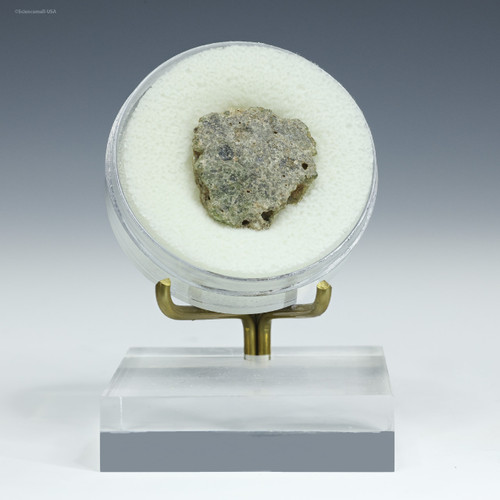
Trinitite Atomic Glass Green Black - 5.8 grams
Brand : Jensan Scientifics LLC
- SKU:
- JPT-85195
- Condition:
- New
- Availability:
- Usually ships in 24 hours.
- Weight:
- 1.00 LBS
- Minimum Purchase:
- 1 unit
- Maximum Purchase:
- 1 unit
- Shipping:
- Calculated at Checkout


Trinitite Atomic Glass Green Black - 5.8 grams
This authentic Trinitite atomic glass specimen weighs 5.8 grams and displays green glass with minor black and a potential field of melted metal or melted white minerals. Formed during the Trinity atomic bomb test on July 16, 1945, at Alamogordo, New Mexico, this legally collected 1948 specimen preserves a direct material record of the first nuclear detonation in history.
Trinitite Atomic Glass Historical Significance
Trinitite formed when the intense thermal pulse from the Trinity test fused desert sand, tower material, device-related residues, and local minerals into a distinctive glassy melt. Green Trinitite is the classic form, while black streaks and scattered metal flakes may reflect localized incorporation of iron-rich or metallic material from the test environment.
This specimen has the visual interest collectors look for: classic green nuclear glass, black contrast, scattered fields of melted wire and/or glassy white mineral melt, documented authenticity, and this exact specimen professionally photographed.
Trinitite Green Black Minor Metal Flakes Product Information
| Object Type | Authentic Trinitite atomic glass |
| Locality | Trinity test site, Alamogordo, New Mexico, USA |
| Formation Event | First atomic bomb test, July 16, 1945 |
| Collection History | Legally collected in 1948 |
| Dimensions | 38 mm H x 32 mm W x 9 mm D; Riker box size: 2 1/2" H X 3 1/4" W X 3/4" D |
| Weight | 5.8 grams |
| Specimen Description | Green Trinitite atomic glass with minor black and/ or fields of melted wire and white minerals. All images show this exact specimen |
| Scientific Significance | Historic nuclear glass formed during the Trinity test, the first nuclear detonation in human history |
| What Is Included | Certificate of Authenticity, XRF analysis, information sheet, specimen tag, and tag stand. The acrylic base and photo cube are not included |
| Use and Display | For educational, scientific, historical, and collector display. Do not inhale, ingest, or wear as jewelry |
| Authentication and Compliance | Tested and verified as authentic. Ships in compliance with applicable U.S. regulations for low-level radioactive material when properly packaged and documented |
| Shipping | Shipping calculated at checkout |
| U.S. Shipping | Free Priority Shipping within the USA |
Images professionally photographed under controlled studio lighting using Zeiss optics and a pro-grade Canon camera.
Rarity & Significance
Scientific Significance: ★★★★★
Market Availability: ★★
Locality Specificity: ★★★★★
Display Appeal: ★★★★
Historical Importance: ★★★★★
Questions Commonly Asked About Trinitite Atomic Glass
What is Trinitite?
Trinitite is glass formed when desert sand and surrounding material were fused by the Trinity atomic bomb test on July 16, 1945, in New Mexico. It is both a geological material and a historical artifact of the beginning of the nuclear age.
What do black streaks and metal flakes in Trinitite mean?
Black streaks and scattered metal flakes may reflect localized incorporation of iron-rich or metallic material from the Trinity test environment. These features add visual contrast and can make a specimen more interesting for collectors.
Is this the exact specimen shown in the photos?
Yes. The photographs show this exact Trinitite specimen, including its minor black and potential fields of melted wire or white minerals.
Can Trinitite be worn as jewelry?
No. This material is sold strictly for educational, scientific, historical, and collector display. It should not be inhaled, ingested, drilled, ground, or worn as jewelry.
Authentic Trinitite is one of the few collectible materials directly tied to a precisely dated scientific and historical event. This larger 5.8-gram specimen offers a documented piece of nuclear history for a serious private collection, an educational display, or a scientific materials archive.