
Trinitite Atomic Glass - Green Black - 1.1 gram
Brand : Jensan Scientifics LLC
- SKU:
- JPT-15829
- Condition:
- New
- Availability:
- Usually ships in 24 hours.
- Weight:
- 1.00 LBS
- Minimum Purchase:
- 1 unit
- Maximum Purchase:
- 1 unit
- Shipping:
- Calculated at Checkout

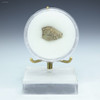


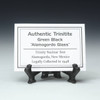

Trinitite, sometimes called atomic glass or nuclear glass, formed during the 1945 Trinity nuclear test. This Trinitite weighs 1.1 grams and is a certified, display-scale scientific and historical collectible.
This trinitite is green with black. It originates from the Trinity atomic blast. This specimen has an interesting mottled green-and-black background.
| Object Type | Trinitite atomic glass collectible |
| Formation Event | Trinity nuclear test, 1945 |
| Locality | Trinity Site, Alamogordo, New Mexico, USA |
| Dimensions | 19 mm x 12 mm x 8 mm |
| Weight | 1.1 grams |
| Color | Green and Black |
| Distinctive Feature | Very unique patches of green and black |
| Authentication & Traceability |
Includes Certificate of Authenticity and XRF documentation, Specimen ID: 38337 |
| Includes | Trinitite, COA, display disc, tag, stand, information sheet, and XRF documentation; Sizing cube not included; Free Trinity, Trinitite Poster - a visual guide to the Atomic Age. |
| Use & Display | Collector display, educational reference, science gift, and historical conversation piece |
| Cautions | Avoid cutting or grinding, as this can produce fine dust. Do not inhale dust. Residual radioactivity is low, comparable to that of real granite countertops. Wash your hands after handling. Do not use for jewelry. |
| Shipping | Calculated at checkout. Free Priority Shipping in the USA. |
The Different Types of Trinitite
Trinitite occurs in several visually distinct forms. Green Trinitite is the most common and is formed primarily from fused desert sand. Less common black and red Trinitite contain iron-bearing material derived from the steel bomb tower structure present at the Trinity test site.
Red Trinitite derives its distinctive coloration from copper, likely introduced by communication cables and other copper-bearing materials surrounding the test apparatus. These compositional variations reflect localized differences in the materials present during detonation and cooling.
What the Macro Image Reveals
At 5× magnification, this trinitite reveals an olive-green glass matrix containing green and dark black inclusions. An interesting patch of potential red is also visible.
Why Trinitite Matters to Collectors
The Trinity test marked the first controlled release of nuclear energy, producing physical atomic glass scattered across the site's desert floor. Trinitite is one of the only tangible remnants created directly by this event, formed in seconds under intense atomic conditions.
For collectors, Trinitite represents a rare convergence of science, history, and material evidence, offering a direct physical connection to the moment the atomic age began. This Trinitite atomic glass preserves localized conditions from the detonation environment at Alamogordo, New Mexico.


