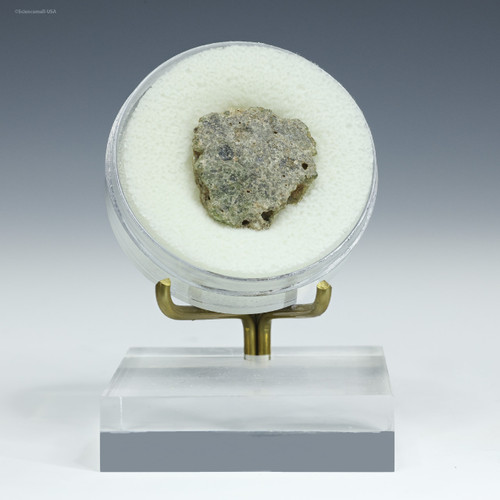
Authentic Trinitite Green Black Red Metal Bleb - 12.9 g
Brand : Jensan Scientifics LLC
- SKU:
- JPT-25887
- Condition:
- New
- Availability:
- Usually ships in 24 hours.
- Weight:
- 1.00 LBS
- Minimum Purchase:
- 1 unit
- Maximum Purchase:
- 1 unit
- Shipping:
- Calculated at Checkout


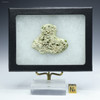


Trinitite Green Black Red Metal Domed Bleb 12.9 g Large
This large 12.9-gram Trinitite specimen is authentic atomic glass formed during the Trinity test on July 16, 1945, near Alamogordo, New Mexico. Legally collected in 1948, this green-with-black specimen has a large, dynamic, domed bleb with a fascinating front and back.
Trinitite Geological Context and Significance
Trinitite is fused desert sand formed by the extreme thermal and pressure conditions of the first atomic bomb test. This specimen preserves a direct material record of the Trinity test, the July 16, 1945, event that marked the beginning of the atomic age.
Unlike ordinary glass, Trinitite formed in a complex open-air detonation environment that included desert sand, steel tower material, copper-bearing components, indigenous minerals, and rapidly quenched melt. The result is a historically significant anthropogenic glass with distinctive color, texture, and compositional variation.
This atomic glass specimen is especially appealing because it combines large size, green-black visual contrast, and a rare dark domed bleb structure. The multiple embedded features give the specimen strong visual interest and display appeal.
Trinitite Specimen Description
This specimen has strong visual characteristics: a larger piece of atomic glass with rarer, multi-featured appeal. At 5×, it shows green glass, relict mineral grains, reddish/dark-black bleb melt domains, and vesicles, together with metallic waves and bleb within a single field. This specimen exemplifies a record of flash melting followed by extraordinarily chaotic rapid cooling. Numerous round-to-subround black cavities are visible throughout the glass. These are predominantly vesicles, representing gas bubbles trapped as the molten material quenched extremely rapidly. Some grains retain distinct angular outlines, while adjacent material has become glassy, illustrating the exceptionally short heating interval: individual mineral grains experienced markedly different degrees of melting over microscopic distances.
| Object Type | Authentic Trinitite atomic glass specimen |
| Locality | Trinity test area, near Alamogordo, New Mexico, USA |
| Historical Formation | Formed during the first atomic bomb test on July 16, 1945 |
| Collection History | Legally collected in 1948 |
| Dimensions | 50 mm L x 40 mm W x 10 mm D |
| Weight | 12.9 grams |
| Specimen Description | Large green black red metal Trinitite with subtle black melt contrast on the front, feathered metal inclusions with a glints of red and a domed bleb; the back has interesting coarse granulation |
| Distinctive Feature | A rare, large, multi-featured atomic glass specimen |
| Scientific Significance | Historic atomic glass formed during the Trinity test, preserving a material record of the first nuclear detonation |
| What Is Included | Certificate of Authenticity, XRF analysis, tag, tag stand, Trinitite info, Free Trinity and Trinitite Poster: A Visual Guide to the Atomic Age |
| Use and Display | For scientific, historical, educational, and private collection display only |
| Authentication and Compliance | Guaranteed authentic; intended for educational and scientific purposes. Do not inhale, ingest, or wear as jewelry |
| Shipping | Shipping calculated at checkout |
| U.S. Shipping | Free Priority Shipping within the USA |
Images professionally photographed under controlled studio lighting using Zeiss optics and a pro-grade Canon camera.
Rarity & Significance
Scientific Significance: ★★★★★
Market Availability: ★
Locality Specificity: ★★★★★
Display Appeal: ★★★★★
Questions Commonly Asked About This Trinitite Specimen
Why does this specimen have both green and black areas?
The green body reflects the fused desert-sand glass most commonly associated with Trinitite. The darker black areas are related to more complex melt chemistry and iron-bearing material present in the Trinity test environment.
Why is 12.9 grams notable for Trinitite?
Many authentic Trinitite specimens available to collectors are small, thin fragments. This 12.9-gram specimen has a stronger display presence and provides more surface area for observing texture, color variation, and embedded melt features.
How should this trinitite be handled?
This Trinitite is intended for scientific, historical, educational, and private collection display only. It should not be inhaled, ingested, ground, polished, altered, or worn as jewelry.
Add this large 12.9-gram Trinitite specimen to a serious scientific or historical collection while it remains available.
This large green-black, minor metal and red Trinitite preserves a rare tangible witness to the Trinity test and the formation of atomic glass. Its 12.9-gram size, visual appeal, and distinctive macroscopic features make it a particularly noteworthy specimen to study and a keepsake from the first atomic-age bomb blast.