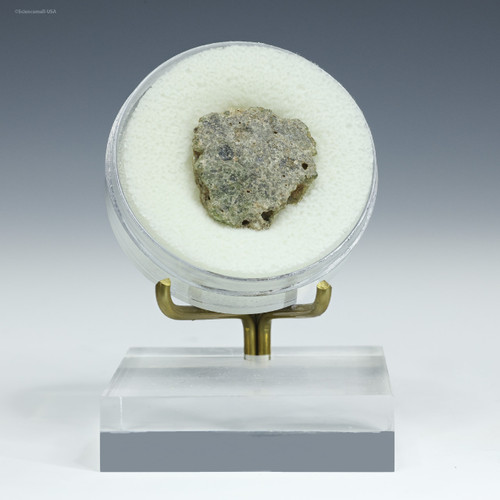
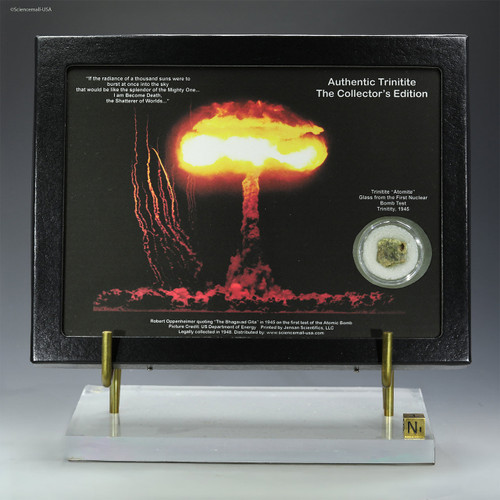
Trinitite Atomic Glass Red Green Black Metal -5.5 g
Brand : Jensan Scientifics LLC
- SKU:
- JPT-29905
- Condition:
- New
- Availability:
- Usually ships in 24 hours.
- Weight:
- 1.00 LBS
- Minimum Purchase:
- 1 unit
- Maximum Purchase:
- 1 unit
- Shipping:
- Calculated at Checkout





Authentic red, green, black, metal Trinitite - 5.5 Grams
This 5.5-gram Trinitite specimen displays a rare combination of red, green, black melt features, and traces of metallic material. Its mixed coloration and historical context make it a distinctive example of atomic glass formed during the Trinity nuclear test of July 16, 1945.
Green Black Red Metal Trinitite Geological Context and Significance
Trinitite, often called atomic glass or nuclear glass, formed when intense heat from the first atomic bomb test fused desert sand, tower material, and local surface debris into glass. Most Trinitite is green, but specimens showing green glass alongside black and red melt features and metallic traces are less common and much more visually complex.
The black areas in Trinitite are generally interpreted as darker melt domains or inclusions formed during the extremely high-temperature event. Trace metallic material may reflect incorporated test-site material, tower-related debris, or other metal-bearing particles entrained into the molten glass during the blast environment.
This specimen is especially appealing because it preserves multiple visual signatures in a single compact piece: classic red, green, black, and a trace of metal. For collectors, that combination gives the specimen stronger observational interest than a simple single-color fragment.
Trinitite Atomic Glass Product Details
| Object Type | Authentic Trinitite atomic glass |
| Locality | Trinity Site, Alamogordo, New Mexico, USA |
| Historical Age | Formed July 16, 1945, during the Trinity nuclear test |
| Dimensions | 32 mm L x 23 mm W x 9 mm D |
| Weight | 5.5 grams |
| Specimen Description | Red, green, black, and metallic traces |
| Scientific Significance | Physical glass formed during the first atomic bomb test, preserving fused desert material from the beginning of the atomic age |
| What Is Included | Trinitite specimen, information tag, tag stand, Certificate of Authenticity, and XRF verification; Free "Trinitity and Trinitite Poster - a Visual Guide to the Atomic Age" |
| Use and Display | For scientific, educational, historical, and collector display only. Do not ingest, inhale, grind, or wear as jewelry |
| Authentication and Compliance | Legally collected in 1948. XRF verification is included. Prepared and shipped in accordance with applicable U.S. regulations |
| Shipping | Shipping calculated at checkout |
| U.S. Shipping | Free Priority Shipping within the USA |
Images professionally photographed under controlled studio lighting using Zeiss optics and a pro-grade Canon camera.
Rarity and Significance
Scientific Significance: ★★★★★
Market Availability: ★★
Radiation Level: ★
Display Appeal: ★★★★★
Buy this rare red, green, and black piece with minor metallic features, weighing 5.5 grams.
Questions Commonly Asked About Green Black Metal Trinitite
Why is Trinitite collectible?
Green is the classic color most associated with Trinitite, while black areas add visual and compositional complexity. A specimen showing many features, especially with minor red and metallic materials, offers stronger display and study value than a more uniform example.
What does the metal in Trinitite represent?
Minor metallic material in Trinitite may reflect metal-bearing debris incorporated into the melt during the blast environment. It is one of the features that can make individual pieces visually and historically distinctive.
Is Trinitite safe to collect?
Trinitite is a low-level radioactive historical material and should be treated as a scientific collectible, not as a toy or jewelry. Keep it displayed, contained, and away from children; do not ingest, inhale, grind, or wear it.
This Trinitite specimen has many diverse features and preserves a compact but visually rich record of the Trinity test - a rare fusion of desert glass and atomic history.