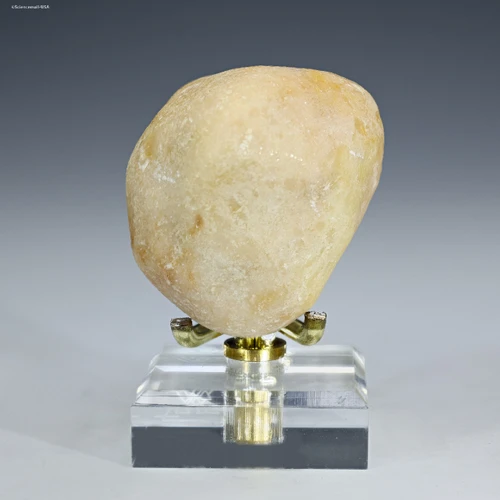
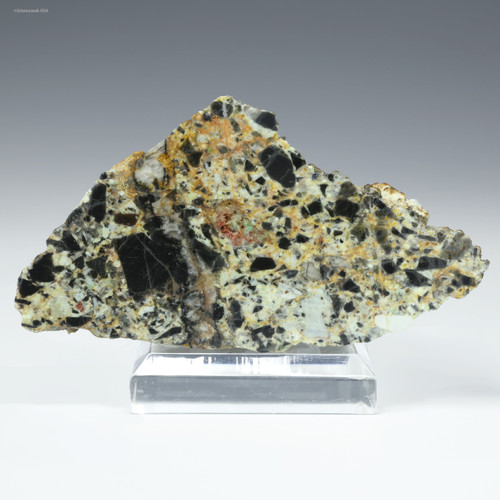
Zhamanshin Impact Glass Kazakhstan - 498 g
Brand : Jensan Scientifics LLC
- SKU:
- JPT-889887
- Availability:
- Usually ships in 24 hours.
- Weight:
- 2.00 LBS
- Minimum Purchase:
- 1 unit
- Maximum Purchase:
- 1 unit
- Shipping:
- Calculated at Checkout


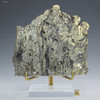
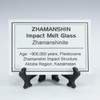
Zhamanshin Impact Glass, Kazakhstan
This impact glass specimen came from the Zhamanshin impact structure in the Aktobe Region of northwestern Kazakhstan, where an asteroid struck about 900,000 years ago. The blast instantly melted the local rock into glass, making Zhamanshin one of the youngest large impact sites on Earth.
About This Zhamanshin Impact Glass
- What is Zhamshinite? Zhamanshinite is natural glass made in an instant. The heat and pressure of the impact melted clays, siltstones, and other local rocks, which then cooled into impact melt glass.
- Where does Zhamshinite come from? The Zhamanshin structure lies about 200 km northwest of the Aral Sea, on the dry plains of Kazakhstan. The crater is about 14 km across.
- Why is Zhamshinite important? Large impacts this young are rare. Zhamanshin is one of only a handful of 10-km-scale impact structures formed in the last million years.
- A one-of-a-kind, dynamic impact glass: Zhamanshin produced two kinds of glass: Zhamanshinite, which formed in and around the crater, and tiny tektite-like droplets called irghizites. No other known impact site is known for this exact pairing.
- The large size of this Zhamshinite is terrific for displays and collections. Most Zhamanshinite on the market is much smaller, rough pieces. At 498 grams, this is a large specimen that is terrific for private or museum displays.
Product Information
| Specimen | Zhamanshin Impact Glass |
| Material | Zhamanshinite (impact melt glass) |
| Locality | Zhamanshin Impact Structure, Aktobe Region, Kazakhstan |
| Age of Impact | About 900,000 years (Middle Pleistocene) |
| Dimensions and Weight | 155 mm W x 147 mm H x 18 mm D, 498 grams |
| Science Gift Options | An amazing gift for meteorite and impact collectors, geology enthusiasts, astronomy fans, science educators, and anyone fascinated by cosmic collisions |
| What's Included | Certificate of Authenticity (COA), information sheet, specimen tag, tag stand. The brass scale cube is shown for size reference only and is not included. |
| Provenance | All of our material is proprietary and sourced from scientists and/or verified scientific estate collections, backed by the included Certificate of Authenticity. |
| Product ID | 889887 |
| Availability | ONLY 1 AVAILABLE |
Images professionally photographed under controlled studio lighting using Zeiss optics and a pro-grade Canon camera, for guaranteed accuracy. The brass scale cube measures 1 cm per side.
Rarity and Significance
| Scientific Significance | ★★★★★ |
| Locality Uniqueness | ★★★★★ |
| Rarity | ★★★★★ |
| Market Availability | ★★☆☆☆ |
| Historical Importance | ★★★★☆ |
| Display Appeal | ★★★★★ |
Questions Commonly Asked About Zhamanshin Impact Glass
What is Zhamanshinite?
Zhamanshinite is impact glass from the Zhamanshin structure in Kazakhstan. It formed when an asteroid strike melted the local rock in seconds.
How old is this specimen?
The Zhamanshin impact happened about 900,000 years ago, during the Middle Pleistocene. Early humans were already living in parts of Africa, Asia, and Europe at the time.
How big was the Zhamanshin impact?
The crater is usually given as about 14 km across. Erosion and windblown dust have softened it, so it is hard to see from the ground today.
Some newer studies using detailed elevation data suggest the original crater may have been even larger.
Is Zhamanshinite a tektite?
No. Tektites are glass droplets thrown far from a crater. Zhamanshin did produce small tektite-like droplets, called irghizites. Zhamanshinite is the larger impact glass that formed in and near the crater itself.
Does it contain pieces of the asteroid?
Mostly, it is melted Earth rock. Chemical studies of Zhamanshinite find little or no trace of the asteroid itself. The impact was so violent that the asteroid largely vaporized.
How should I care for this specimen?
Keep it dry and handle it gently. Impact glass can have sharp or fragile edges and small gas holes. A soft brush or a puff of air removes dust safely.
Hold the moment an asteroid turned solid rock into glass. This bold, dynamic 498-gram specimen of Zhamanshin impact glass is a showpiece from one of the youngest large impact sites on Earth, and a size rarely offered on the market. Only one available.