Manganese Nodules - 4 oz - Mixed Fragments, Rocks, Fines
Brand : Sciencemall-USA
- SKU:
- JPT-72886
- Availability:
- Usually ships in 24 hours.
- Weight:
- 1.00 LBS
- Minimum Purchase:
- 1 unit
- Maximum Purchase:
- 2 units
- Shipping:
- Calculated at Checkout


Polymetallic Manganese Nodules - Fragments, Mixed Sediments, Fines
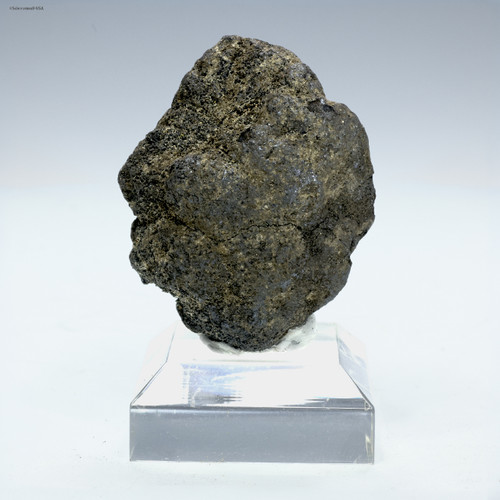
We sell jars of varying weights of genuine polymetallic manganese nodules recovered by ocean dredging in the 1990s in the Clarion-Clipperton Zone (CCZ), a vast abyssal plain in the Pacific Ocean lying between Hawaii and Mexico at a reported depth of roughly 3,000 to 6,000 meters. The nodules are dark brownish-black, roughly potato-shaped concretions ranging from small pellets to small-sized lumps, presented together with the unsorted deep-sea sediment, fines, and associated rock fragments that come up in a real dredge haul. Nothing is polished or cherry-picked, so the jar reads as a diverse range of material from the Pacific Ocean floor rather than a display-sized specimen.
Scientific Importance of Manganese Nodules
Material of this type is scientifically important because it is well documented to be enriched in manganese and iron oxides, with lesser but economically significant amounts of nickel, cobalt, copper, and rare earth elements. This places it at the center of modern research into critical mineral resources and the emerging technology of deep-sea mining. This makes the product an excellent teaching object for oceanography, economic geology, and Earth science classrooms, as well as a genuinely uncommon addition to a serious mineral or deep-sea mining collection.
How These Nodules Form
Manganese nodules grow by the slow precipitation of manganese and iron oxides out of seawater and sediment pore water, layer by layer around a nucleus that may be a shark tooth, a bone fragment, or even a grain of sediment. They are among the slowest-growing features known on Earth, accreting only a few millimeters over millions of years. Because of this, even a modest nodule can represent an immense span of geologic time, recording ocean chemistry in fine concentric layers much like the rings of a tree.
Why This Manganese Nodule Material Matters
The Clarion-Clipperton Zone holds one of the largest known concentrations of polymetallic nodules on the planet and is the primary focus of international interest in deep-sea mining. The same metals that make these nodules a research and policy flashpoint - nickel, cobalt, copper, and manganese - are the metals used in batteries, electronics, and steel.
Collector and Classroom Appeal
Authentic, scientist-sourced abyssal material rarely reaches private hands, and dredged CCZ nodules with their natural sediment and fines are uncommon on the collector's market. The dark nodules against the pale fines make a strong visual contrast for display, while the mixed hand-sample format is ideal for teaching how deep-sea samples actually arrive on deck.
Product Information
| Object Type | Polymetallic manganese nodules with unsorted deep-sea sediment, fines, and associated rock fragments |
| Locality | Clarion-Clipperton Zone (CCZ), abyssal Pacific Ocean between Hawaii and Mexico |
| Reported Depth | Depth zone roughly 3,000 to 6,000 m |
| Collection Method | Collected by dredge; scientist-sourced material |
| Container | Clear screw-top jar, approximately 70 mm x 70 mm (2.75 in x 2.75 in) |
| Net Weight | Approximately ~4 oz, (about 1/4 lb), ~113 grams+ |
| Specimen Description | Dark brownish-black nodules ranging from pellet-sized to small-sized fragments mixed with fine abyssal sediment and associated with deep-sea rock fragments |
| Scientific Significance | Nodules of this type are characteristically enriched in manganese and iron oxides and are associated with nickel, cobalt, copper, and rare earth elements; central to critical-mineral and deep-sea-mining research |
| Provenance | Scientist-sourced deep-sea dredge material, Source: the Clarion-Clipperton Zone |
| What Is Included | The sealed specimen jar as shown, a Certificate of Authenticity, and information about the product. XRF included. The reference cube is for scale only and is not included |
| Use and Display | Classroom and teaching use, museum-style display, or private scientific collection |
| Authentication and Compliance | Ships with a Sciencemall-USA Certificate of Authenticity and specimen details; XRF included |
| Shipping | Shipping calculated at checkout |
| U.S. Shipping | Free Priority Shipping within the USA |
Images professionally photographed under controlled studio lighting using Zeiss optics and a pro-grade Canon camera.
Rarity and Significance
| Scientific Significance | ★★★★★ (5 / 5) - Central to critical-mineral and deep-sea research |
| Market Availability | ★★★½☆ (3.5 / 5) - Uncommon commercial specimen; authentic dredged CCZ material is offered only occasionally |
| Locality Specificity | ★★★★½ (4.5 / 5) - Attributed to a named, well-documented abyssal zone |
| Display Appeal | ★★★★☆ (4 / 5) - Strong dark-on-pale contrast and authentic dredge presentation |
Very few Earth-science specimens combine deep, genuine remoteness of origin, active scientific relevance, and clear classroom value as do abyssal, dredged, deep-sea-mined manganese nodules.
Questions Commonly Asked
What is this specimen?
This is a jar of genuine polymetallic manganese nodules with their natural, unsorted deep-sea sediment, fines, and associated rock fragments, recovered by dredge from the Clarion-Clipperton Zone of the abyssal Pacific. The nodules are slow-growing oxide concretions enriched in manganese and iron and associated with nickel, cobalt, copper, and rare earth elements.
When were manganese nodules first discovered?
They were first recovered during the pioneering HMS Challenger expedition of 1872 to 1876, the voyage widely credited with founding modern oceanography. The Challenger crew dredged up these dark concretions in 1873 and described them as being rich in manganese and iron. At the time, they were treated as a scientific curiosity; it took roughly a century before their value as a metal resource was widely recognized.
Are manganese nodules found in all of Earth's oceans?
Nodules are reported from all the major ocean basins, including the Pacific, Atlantic, and Indian Oceans, and they have even been found in some shallow seas and freshwater lakes. However, they are not evenly distributed or equally valuable. The richest and most metal-enriched fields, and nearly all serious scientific and commercial interest, are concentrated in the Pacific, primarily in the Clarion-Clipperton Zone, from which this material comes.
Is any industry currently using dredged manganese nodules?
Not yet at commercial scale. As of 2026, only exploratory and pilot-scale collection has taken place, and no full commercial deep-sea mining operation is yet running. The situation is changing quickly: in early 2026, U.S. regulators finalized new permitting rules for seabed minerals, at least one company has applied to recover nodules commercially from the Clarion-Clipperton Zone, and international rules are still being negotiated. Some analysts expect commercial collection to ramp up as early as late 2026 or 2027, making authentic nodule material especially interesting.
How did these nodules form?
Each nodule grew by the extremely slow precipitation of manganese and iron oxides from seawater and sediment pore water, building up in fine concentric layers around a small nucleus, such as a shark tooth or a sediment grain. Growth rates are on the order of only a few millimeters per million years, so even a small nodule can represent a very long span of geologic time.
What is included with the specimen?
You receive the sealed specimen jar as shown, a Sciencemall-USA Certificate of Authenticity, XRF, and printed specimen information. The brass nickel reference cube pictured in several photographs is shown for scale only and is not included.
Add these Clarion-Clipperton Zone manganese nodules to a serious Earth-science collection, a classroom teaching set, or a museum-style geological display.
Genuine, scientist-sourced polymetallic nodules dredged from thousands of meters beneath the Pacific in the Clarion-Clipperton Zone - a slow-formed abyssal resource, millions of years in the making, that sits at the center of today's critical-mineral and deep-sea-mining science.