Manganese Nodule Clarion Clipperton Fracture Zone - Lg
Brand : Jensan Scientifics LLC
- SKU:
- JPT-27261
- Condition:
- New
- Availability:
- Usually ships in 24 hours.
- Weight:
- 1.00 LBS
- Minimum Purchase:
- 1 unit
- Maximum Purchase:
- 1 unit
- Shipping:
- Calculated at Checkout


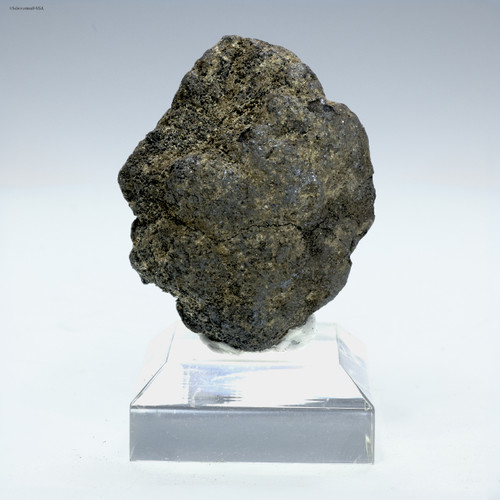
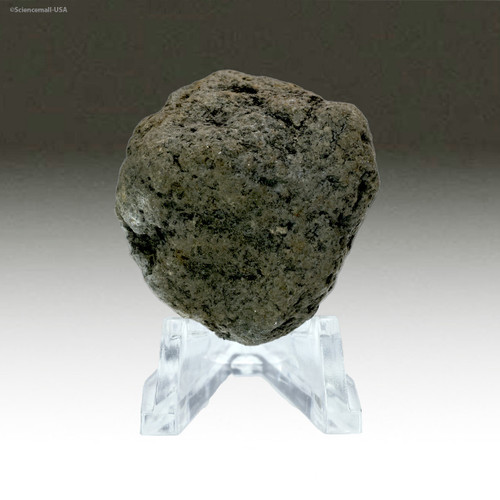
Dynamic Larger Botryoidal Manganese Nodule, CCFZ Pacific
This manganese nodule specimen came from the abyssal seafloor of the Clarion-Clipperton Fracture Zone (CCFZ) in the Pacific Ocean, where nodules grow at roughly 4,000 to 6,000 meters below the surface. This manganese nodule has a broad, flattened profile and a fully botryoidal surface, it is a complete nodule with no repairs and arrives with an XRF.
About This Manganese Nodule
Manganese nodules are slow-growing lumps of metal oxide that form on the deep ocean floor. Layer by layer, they pull manganese and iron from seawater and the sediment beneath them, along with nickel, copper, cobalt, and rare earth elements. Most grow only a few millimeters per million years, which makes them among the slowest-forming objects in geology.
This specimen is unusually broad and dynamic for its weight, giving it a large display surface covered in rounded, grape-like (botryoidal) growth. The pale patches on its surface are typical of nodules recovered from the abyssal plain, where fine seafloor sediment cling to the outer layers.
The CCFZ holds the largest known concentration of these nodules on Earth. It sits at the center of worldwide scientific interest about deep-sea mining, critical metals, and ocean conservation.
Product Information
| Specimen | Polymetallic manganese nodule, large botryoidal, complete |
| Locality | Clarion-Clipperton Fracture Zone (CCFZ), abyssal Pacific Ocean |
| Composition | Primarily manganese and iron oxides, with nickel, copper, cobalt, rare earth elements, silicon, aluminum, and titanium |
| Preparation | Complete natural nodule, no repairs; complex botryoidal surface |
| Dimensions and Weight | 63 mm x 40 mm x 10 mm, 24.6 g |
| Science Gift Options | A memorable gift for anyone fascinated by the deep ocean, geology, or the metals that power modern technology |
| What's Included | Manganese nodule specimen, Certificate of Authenticity, XRF elemental analysis, specimen tag, display tag stand, information about manganese nodules, protective case. The brass scale cube and plexiglass base shown in the photos are not included. |
| Provenance and Authenticity | All of our material is proprietary and sourced from scientists and/or verified scientific estate collections, backed by the included Certificate of Authenticity and information about the specimen. XRF included. |
| Cautions and Safety | Intact solid specimen, safe to handle and display. Do not cut, grind, or crush. Do not ingest; keep away from small children. Wash hands after handling. |
| SKU | JPT-13756 |
| Availability | ONLY 1 of this quality |
Images professionally photographed under controlled studio lighting using Zeiss optics and a pro-grade Canon camera, for guaranteed accuracy. The brass scale cube measures 1 cm per side.
Rarity and Significance
| Rarity | ★★★★☆ |
| Scientific Significance | ★★★★★ |
| Educational Value | ★★★★★ |
| Display Appeal | ★★★★★ |
| Collectibility | ★★★★★ |
Questions Commonly Asked About Manganese Nodules
What is a manganese nodule?
A manganese nodule is a rounded lump of metal oxide that grows on the deep ocean floor. It starts around a small core, such as a shell fragment, a shark tooth, or a bit of rock, and slowly builds up layers of manganese and iron oxide that trap other metals from seawater and sediment.
How long did this nodule take to form?
Published growth rates for nodules are typically a few millimeters per million years when the metals come from seawater, and faster when they come from the sediment below. That points to a history measured in millions of years, though the exact age of any single nodule can only be determined by laboratory dating.
What are the pale patches on the surface?
Pale patches on abyssal nodules are most often fine seafloor sediment and the remains of tiny organisms that live on nodule surfaces. They are part of the nodule's natural seafloor history and have been left in place.
Why is the Clarion-Clipperton Fracture Zone important?
The CCFZ is a vast stretch of abyssal Pacific seafloor between Hawaii and Mexico that holds the largest known concentration of manganese nodules on Earth. Its nickel, cobalt, copper, and manganese are central to ongoing international discussion about deep-sea mining, battery metals, and protecting deep-ocean ecosystems.
What does the XRF analysis show?
X-ray fluorescence (XRF) measures which elements are present in a material. The included analysis shows an elemental composition consistent with CCFZ polymetallic nodules, giving you a documented chemical fingerprint to go with your specimen.
Is it safe to handle and display?
Yes, under normal handling. The nodule is a stable solid and can be handled like any mineral specimen. Do not cut, grind, or crush it, since that creates metal oxide dust, and wash your hands after handling.
This is a unique manganese nodule! Rich botryoidal growth covers it on both sides, so it shows off beautifully from any angle, and its broad, shapely outline gives it a bold presence, rare for most manganese nodules. It is a showpiece ready to anchor any geology or terrific ocean science collection.