Copper Ore Copper Nunataks Lassiter Coast Antarctica
Brand : Jensan Scientifics LLC
- SKU:
- JPT-25957
- Availability:
- Usually ships in 24 hours.
- Weight:
- 1.00 LBS
- Minimum Purchase:
- 1 unit
- Maximum Purchase:
- 1 unit
- Shipping:
- Calculated at Checkout


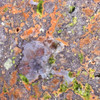

Copper Ore from the Antarctic Peninsula
This Upper Cretaceous copper ore comes from the Copper Nunataks on the Lassiter Coast of Palmer Land, the southernmost known copper deposit in the entire circum-Pacific ring of copper mineralization. Scientist-sourced and legally collected in the 1980s, it is a rare rock specimen from the same arc system that built the great copper belts of the Andes.
About This Antarctic Copper Ore
The Copper Nunataks are a cluster of rock peaks rising through the ice of the Lassiter Coast in Palmer Land, deep in the southern Antarctic Peninsula. During the Late Cretaceous, the Pacific seafloor was subducting beneath this margin, feeding a chain of magmas that formed the Andean arc, a belt of volcanoes and intrusions that once ran unbroken from South America into West Antarctica. At the Copper Nunataks, a concentrically zoned quartz monzonite stock intruded the crust and drove hot, metal-bearing fluids through the surrounding rock, producing extensive hydrothermal alteration and copper mineralization.
Field parties mapped the deposit in the 1970s and described it in a 1977 Professional Paper as the southernmost known circum-Pacific copper deposit, with clear affinities to the porphyry copper class. That classification places it in the same family as the giant porphyry copper systems of Chile and Peru, which supply a large share of the world's copper. Here, at the far southern end of the arc, the system was frozen in place, preserved under ice, and protected from mining by international treaty.
Photography Images Description
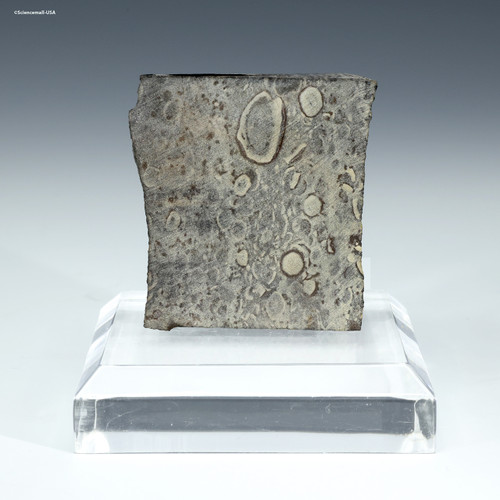
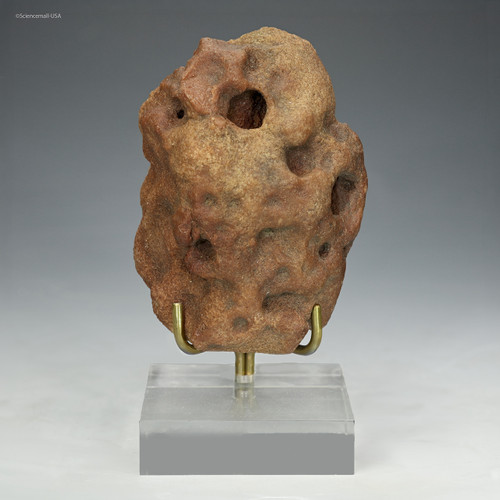
This specimen shows the deposit's alteration history on both cut faces. A fine-grained purplish-gray groundmass is laced with rust-orange iron oxide and scattered with bright yellow-green epidote, small pale inclusions, and open cavities. Epidote is the signature alteration mineral of the Copper Nunataks, deposited by the same hydrothermal fluids that carried copper through the rock about 95 million years ago. The 4x close-up reveals how intricately the orange and green phases weave through the matrix.
Product Information
| Specimen | Copper Ore |
| Geologic Age | Upper Cretaceous |
| Locality | Copper Nunataks, Lassiter Coast, Palmer Land, Antarctic Peninsula |
| Collected | Scientist-sourced, legally collected in the 1980s |
| Preparation | Professionally diamond saw trimmed smooth both sides |
| Dimensions and Weight | 85 mm x 54 mm x 8 mm, Weight: 69.6 grams |
| Photographic Notes | Includes a 4x magnification close-up of the cut face showing the interwoven iron oxide and epidote |
| Science Gift Options | A distinctive gift for geologists, economic geology and mineral collectors |
| What's Included | Copper ore specimen, Certificate of Authenticity, tag and tag stand, information about the specimen, photo cube and stand not included |
| Provenance | All of our material is proprietary and sourced from scientists and/or verified scientific estate collections, backed by the included Certificate of Authenticity. |
| Specimen Number | 25957 |
| Availability | ONLY 1 AVAILABLE. You will receive the exact specimen pictured. |
Images professionally photographed under controlled studio lighting using Zeiss optics and a pro-grade Canon camera, for guaranteed accuracy.
The brass scale cube measures 1 cm per side.
Rarity and Significance
| Rarity | ★★★★★ |
| Market Availability | ★ ☆☆☆☆ |
| Scientific Significance | ★★★★★ |
| Display Presence | ★★★★☆ |
Questions Commonly Asked About Antarctic Copper Ore
Is it legal to own a rock from Antarctica?
Yes, as long as the material was legally collected. This specimen is scientist-sourced, was legally collected in the 1980s, and is accompanied with a Certificate of Authenticity and specimen information.
Where are the Copper Nunataks?
The Copper Nunataks are a group of rock peaks on the Lassiter Coast of Palmer Land, in the southern Antarctic Peninsula. A nunatak is a bedrock summit that projects above the surrounding ice sheet, and these exposures are among the few places where geologists can sample the deposit directly.
Why is there copper in Antarctica?
The Antarctic Peninsula is the southern continuation of the Andean arc. During the Cretaceous, subduction of Pacific oceanic crust generated magmas along the entire margin, and some of those intrusions released copper-bearing hydrothermal fluids.
The Copper Nunataks deposit is the southernmost known example in the circum-Pacific belt, making this specimen a geographic endpoint of one of Earth's great metal-producing systems.
Will this copper ever be mined?
No. The U.S. Geological Survey judged the deposit to have no present economic potential, and the 1991 Protocol on Environmental Protection to the Antarctic Treaty prohibits any mining of mineral resources.
What causes the green and orange colors?
The bright yellow-green mineral is epidote, a calcium-aluminum-iron silicate that forms when hot hydrothermal fluids alter the original igneous minerals. At the Copper Nunataks, epidote is the most widespread alteration mineral, occurring as grains, masses, and fracture coatings throughout the deposit.
The rust-orange networks are iron oxides formed around primary sulfide minerals such as pyrite and chalcopyrite. Green copper carbonates like malachite are rare here because the extremely cold, dry Antarctic climate allows almost no chemical weathering.
ONLY 1 AVAILABLE. A legally collected, scientist-sourced specimen from the southernmost known copper deposit in the circum-Pacific belt, from a continent where mining is permanently prohibited. Specimen No. 25957 is one of a kind, and once it is gone, it is gone.