
Sudbury Impact Structure Pseudotachylite
Brand : Sciencemall-USA
- SKU:
- JPT-219634
- Condition:
- New
- Availability:
- Usually ships in 24 hours.
- Weight:
- 2.00 LBS
- Minimum Purchase:
- 1 unit
- Maximum Purchase:
- 1 unit
- Shipping:
- Calculated at Checkout

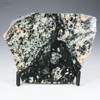

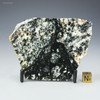


Sudbury Impact Structure Pseudotachylite
This large pseudotachylite specimen from the Sudbury Impact Structure in Ontario, Canada, preserves evidence of one of Earth's greatest known impact events. Its dark, cryptocrystalline melt matrix and angular clasts make it a powerful teaching and display specimen for impact geology, planetary science, and deep-time collections.
Sudbury Pseudotachylite Geological Context
The Sudbury Impact Structure is the deeply eroded remnant of a Paleoproterozoic impact event that occurred approximately 1.85 billion years ago (1.85 Ga). Unlike a fresh bowl-shaped crater, Sudbury is best described today as an impact structure because the original crater form has been altered by erosion, deformation, metamorphism, and long-term geological modification.
Pseudotachylite is especially important because it records extreme stress, crushing, frictional heating, melting, and rapid cooling associated with major crustal disruption. In the Sudbury region, dark pseudotachylitic material occurs alongside fractured, fragmented country rock, giving collectors a direct view of the physical violence of large-scale impact processes.
Sudbury Impact Structure Pseudotachylite Significance
This specimen is more than a dark impact rock. It represents a rare surviving record of shock-related geological transformation from one of Earth's largest confirmed impact structures. The contrast between the dark melt matrix and lighter angular clasts gives the piece a strong visual character while also making it useful for explaining impact brecciation, melt generation, and post-impact geological modification.
For educators, collectors, and display buyers, Sudbury pseudotachylite offers a tangible way to discuss asteroid impacts, crustal deformation, impact melt rocks, and the difference between a modern visible crater and an ancient, deeply modified impact structure.
| Object Type | Pseudotachylite impact rock specimen |
| Geological Age | Paleoproterozoic Sudbury impact event, approximately 1.85 billion years ago; 1.85 Ga |
| Locality | Sudbury Impact Structure, Ontario, Canada |
| Specimen Details | 95 mm L x 72 mm W x 16 mm D; 215 grams |
| Distinctive Feature | Large, visually strong pseudotachylite with dark impact-related melt material and contrasting clasts |
| Authentication & Traceability | Guaranteed authentic, professionally and legally collected scientific material |
| Included With Purchase | Certificate of Authenticity, specimen tag, tag stand, and information about the specimen |
| Not Included | Display stand and photo cube |
| Shipping | Calculated at checkout |
Images professionally photographed under controlled studio lighting using Zeiss optics and a pro-grade Canon camera.
Rarity & Significance
Scientific Significance: ★★★★★
Market Availability: ★★
Locality Specificity: ★★★★★
Display Appeal: ★★★★
This Sudbury pseudotachylite is well suited for private collections, geology classrooms, impact-crater displays, science gifts, and museum-style educational arrangements.
Questions Commonly Asked About Sudbury Pseudotachylite
Is Sudbury a crater or an impact structure?
Sudbury is best described as an impact structure. The original crater has been deeply modified by erosion, deformation, metamorphism, and later geological processes, so it no longer appears as a simple fresh crater.
What is pseudotachylite?
Pseudotachylite is a dark, fine-grained rock produced by intense crushing, frictional heating, melting, and rapid cooling during extreme geological events. In impact settings, it can preserve evidence of shock-related deformation and melt generation.
Why is Sudbury important in impact geology?
Sudbury is one of Earth's largest confirmed impact structures and one of the most important natural laboratories for studying ancient impact processes, impact melt systems, crustal deformation, and associated mineralization.
Is this a good teaching specimen?
Yes. The specimen is large enough to display well and visually shows contrasting clasts within dark impact-related material, making it useful for explaining impact melt rocks, brecciation, and ancient planetary-scale events.


