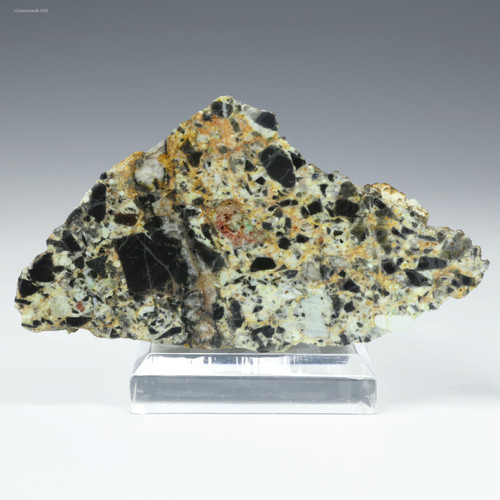
Marble Bar Meteorite Impact Spherule Bed [116 g ~ 3.47 Ga]
Brand : Jensan Scientifics LLC
- SKU:
- JPT-871239
- Condition:
- New
- Availability:
- Usually ships in 24 hours.
- Weight:
- 1.00 LBS
- Minimum Purchase:
- 1 unit
- Maximum Purchase:
- 1 unit
- Shipping:
- Calculated at Checkout

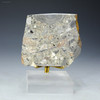
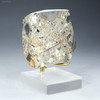
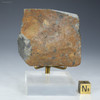
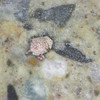

Marble Bar spherule bed from the East Pilbara Craton
This rare Marble Bar spherule bed preserves part of the Archean impact-ejecta record from Western Australia, one of Earth's most important regions for studying early crust, ancient oceans, and large meteorite impacts.
Professionally hand-trimmed to reveal a polished, smooth face, this 34-gram specimen displays a dense, breccia-like texture with pale chert, gray lithic fragments, reddish-brown weathering, and visible spherule-bearing material from deep geologic time.
Marble Bar Spherule Bed: Geological Significance
The Marble Bar spherule bed is scientifically important because it belongs to one of the oldest and rarest known records of impact-related material on Earth. These ancient layers formed during the Paleoarchean, when Earth's crust, atmosphere, oceans, and early surface environments were still evolving under conditions very different from those of the modern planet.
This material is from the Marble Bar Chert Member of the Duffer Formation, Warrawoona Group, in the East Pilbara Craton of Western Australia. The Marble Bar Chert Member has been studied as part of the Archean Biosphere Drilling Project and is known for silicified sedimentary rocks, chert, breccia, and impact-ejecta horizons containing small spherules interpreted as fallout from large meteorite impacts.
Impact spherules form when a high-energy impact melts and vaporizes both the target rock and the impactor material. Droplets and condensates can travel through the atmosphere before falling back to Earth and becoming preserved in sedimentary layers. In rocks this old, original glassy textures are commonly altered or replaced during silicification and later geologic history, but the spherule-bearing layer remains a rare physical record of early planetary bombardment.
A Rare Window into Western Australia's Archean Impact Ejecta
This specimen is not presented as a crater rock. It is more accurately described as an ancient impact-ejecta spherule bed: sedimentary material that records fallout from a major impact event during the Archean Eon. That distinction matters. Spherule beds can be deposited far from the original impact site, making them valuable regional or even global markers of ancient impact activity.
The Marble Bar Chert Member impact-ejecta unit contains silicified spherules, commonly millimeter-scale, with Fe-rich rims and geochemical features consistent with impact-related processes. For collectors, educators, and institutions, this makes the specimen unusually meaningful: it links the visible stone texture to planetary-scale events that occurred more than 3 billion years ago.
Rarity & Significance
Scientific Significance: ★★★★★
Market Availability: ★
Locality Specificity: ★★★★★
Display Appeal: ★★★★★
Product Table
| Object Type | Archean impact-ejecta spherule bed specimen |
| Locality | Marble Bar, Pilbara Craton, Western Australia |
| Geological Unit | Marble Bar Chert Member, Duffer Formation, Warrawoona Group |
| Geological Age | Paleoarchean, approximately 3.46-3.45 billion years ago; commonly discussed within the broader ~3.47 Ga Archean impact record |
| Weight | 116 grams |
| Dimensions | 61mm L X 56mm W X 21mm D |
| Specimen Description | Professionally trimmed and displayed specimen with a polished smooth face showing pale chert, gray lithic fragments, reddish-brown iron staining (back), and spherule-bearing texture |
| Scientific Significance | Represents part of the Archean impact-ejecta record preserved in the Pilbara Craton, one of the key terrains for studying early Earth crust, ancient surface environments, and major meteorite impact events |
| What Is Included | Marble Bar spherule bed specimen, Certificate of Authenticity, specimen tag, tag stand, and information about the specimen |
| Use & Display | Suitable for private collections, geology displays, early Earth education, planetary science interpretation, and impact science |
| Authentication & Compliance | Professionally and legally collected; COA included |
| Shipping | Shipping calculated at checkout |
| U.S. Shipping | Free Priority Shipping within the USA |
Images professionally photographed under controlled studio lighting using Zeiss optics and a pro-grade Canon camera.
This Marble Bar spherule bed is a rare opportunity to own a specimen from Earth's early impact history, from one of the most scientifically important Archean terrains on the planet!
Questions Commonly Asked About the Marble Bar Spherule Bed
Is this Marble Bar specimen a meteorite?
No. This is not a meteorite. It is a terrestrial rock that preserves impact-related spherule-bearing material. The spherules are interpreted as impact ejecta, meaning material formed or deposited as fallout from a large ancient meteorite impact event.
Why are Archean impact spherule beds important?
Archean impact spherule beds preserve evidence of large impact events from a time when Earth's surface environments were still very young. They help scientists study early bombardment, crustal evolution, sedimentary environments, and the physical conditions that shaped the young planet.
Does this specimen come from an impact crater?
It is more precise to describe this as impact-ejecta material rather than crater rock. Spherule beds can be deposited at significant distances from the impact site, so the specimen records an impact event without requiring that it came directly from the crater structure itself.
Why is the East Pilbara Craton significant?
The East Pilbara Craton preserves some of Earth's oldest accessible crustal and sedimentary records. Its Archean rocks are central to studies of early oceans, volcanic landscapes, hydrothermal systems, microbial environments, and ancient impact deposits.
Few display specimens connect so directly to the violent, formative conditions of early Earth. This Marble Bar spherule bed carries the visual texture of deep time and the scientific weight of planetary impact history in one compact, museum-style specimen.