
Eospermatopteris "Gilboa Tree" Earliest Fossil Forest - Lg
Brand : Sciencemall-USA
- SKU:
- JPT-17738
- Availability:
- Usually ships in 24 hours.
- Weight:
- 1.00 LBS
- Minimum Purchase:
- 1 unit
- Maximum Purchase:
- 1 unit
- Shipping:
- Calculated at Checkout

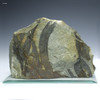
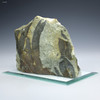
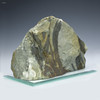
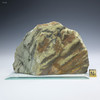
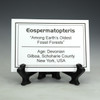
Gilboa Tree Fossil, One of Earth's First Forests
This Eospermatopteris specimen came from the Middle Devonian fossil forest deposits near Gilboa, Schoharie County, New York, the site that gave science its first look at a forest of the world's earliest trees. Approximately 385 million years old, it preserves dark carbonaceous plant remains in fine silty sandstone.
About the Gilboa Tree
Eospermatopteris belonged to the cladoxylopsids, an extinct group of early trees distantly related to ferns and horsetails. Gilboa is where science first met these trees, and their forest still helps explain how Earth turned green.
- Built differently: No true leaves, no seeds, and no single woody core. A crown of branching twigs sat atop a slender trunk that flared into a bulb-shaped base, and the tree reproduced by spores.
- About 26 feet tall: For over a century only the stumps were known. Complete trees found in 2007, about 8 miles away, finally joined the Gilboa stumps to their crowns, known as Wattieza.
- A trunk of hundreds of strands: Exceptionally preserved relatives show the trunk was a ring of separate woody strands, each adding its own growth rings, a growth plan found in no living tree.
- A true forest community: When the floor of the original Riverside Quarry was re-exposed in 2010, mapping revealed root systems still in growth position alongside early woody climbers and tree-sized clubmosses.
Product Information
| Specimen | Eospermatopteris ("Gilboa Tree") |
| Plant Group | Cladoxylopsida, an extinct group of early trees related to ferns and horsetails |
| Geologic Age | Middle Devonian (Givetian), approximately 385 million years |
| Locality | Gilboa, Schoharie County, New York, USA |
| Matrix | Fine silty sandstone of the Catskill Delta with carbonaceous plant remains and iron-oxide staining |
| Dimensions and Weight | 128 x 87 x 42 mm, 556 g |
| Science Gift Options | Free science poster with purchase |
| What's Included | Certificate of Authenticity, specimen tag, tag stand, detailed specimen information |
| Authenticity | All of our material is proprietary and sourced from scientists and/or verified scientific estate collections, backed by the included Certificate of Authenticity. |
| Legality | Legally collected |
| Brand | Sciencemall-USA |
| SKU | JPT-17738 |
| Availability | Only 1 available, this large |
Images professionally photographed under controlled studio lighting using Zeiss optics and a pro-grade Canon camera, for guaranteed accuracy.
Rarity and Significance
| Scientific Significance | ★★★★★ |
| Locality Uniqueness | ★★★★★ |
| Rarity | ★★★★☆ |
| Market Availability | ★☆☆☆☆ |
| Historical Importance | ★★★★★ |
| Display Appeal | ★★★★☆ |
Questions Commonly Asked About the Gilboa Tree
Is Gilboa the world's oldest fossil forest?
Gilboa held that title for most of the 20th century and remains the classic early forest site.
Gilboa's trees still rank among the first known, and its stumps are where the story of Earth's earliest forests began.
What did the Gilboa Tree look like?
Picture a palm or tree fern about 26 feet tall. A crown of branching, leafless twigs topped a straight trunk that swelled into a bulb-shaped base, some nearly 3 feet across, anchored by a mat of roots.
Why is it called a "dawn seed fern" if it made spores?
Eospermatopteris means "dawn seed fern." When paleobotanist Winifred Goldring of the New York State Museum named the stumps in 1924, associated fossils suggested the trees bore seeds.
Later discoveries showed the Gilboa Tree reproduced by spores, but scientific naming rules keep the original name.
Can you see the tree's internal structure?
Most Gilboa fossils preserve the outer form of the trees and dark carbon films of plant tissue rather than cell-level anatomy. This specimen shows carbonaceous plant remains in sandstone, the classic way the Gilboa forest is preserved.
How did early forests change the planet?
Scientists link the spread of Devonian forests to major changes on Earth:
- Roots broke down rock and built deeper soils
- More plant growth drew carbon dioxide from the atmosphere
- Forest floors created new habitats for early land animals
The Eospermatopteris "Gilboa Tree" is one of the first trees ever to grow on Earth, 385 million years ago on the coastal plain of what is now New York. Bold black streaks stand out sharply against pale sandstone, set off by warm golden-brown tones from natural iron minerals, in a substantial 556-gram specimen with real presence in a curio cabinet or in a museum display.


