
2026: Rock of the Year Award - Trinitite
Posted by The Science Mall Team on 6th Feb 2026
Trinitite: A Geological Marker for Civilization's Threshold
In every era, humanity crosses thresholds it does not immediately recognize. These moments are rarely announced as turning points. They arrive quietly, framed as technical milestones or incremental progress, only later revealing themselves as boundary crossings — points beyond which there is no return to the previous timespan.
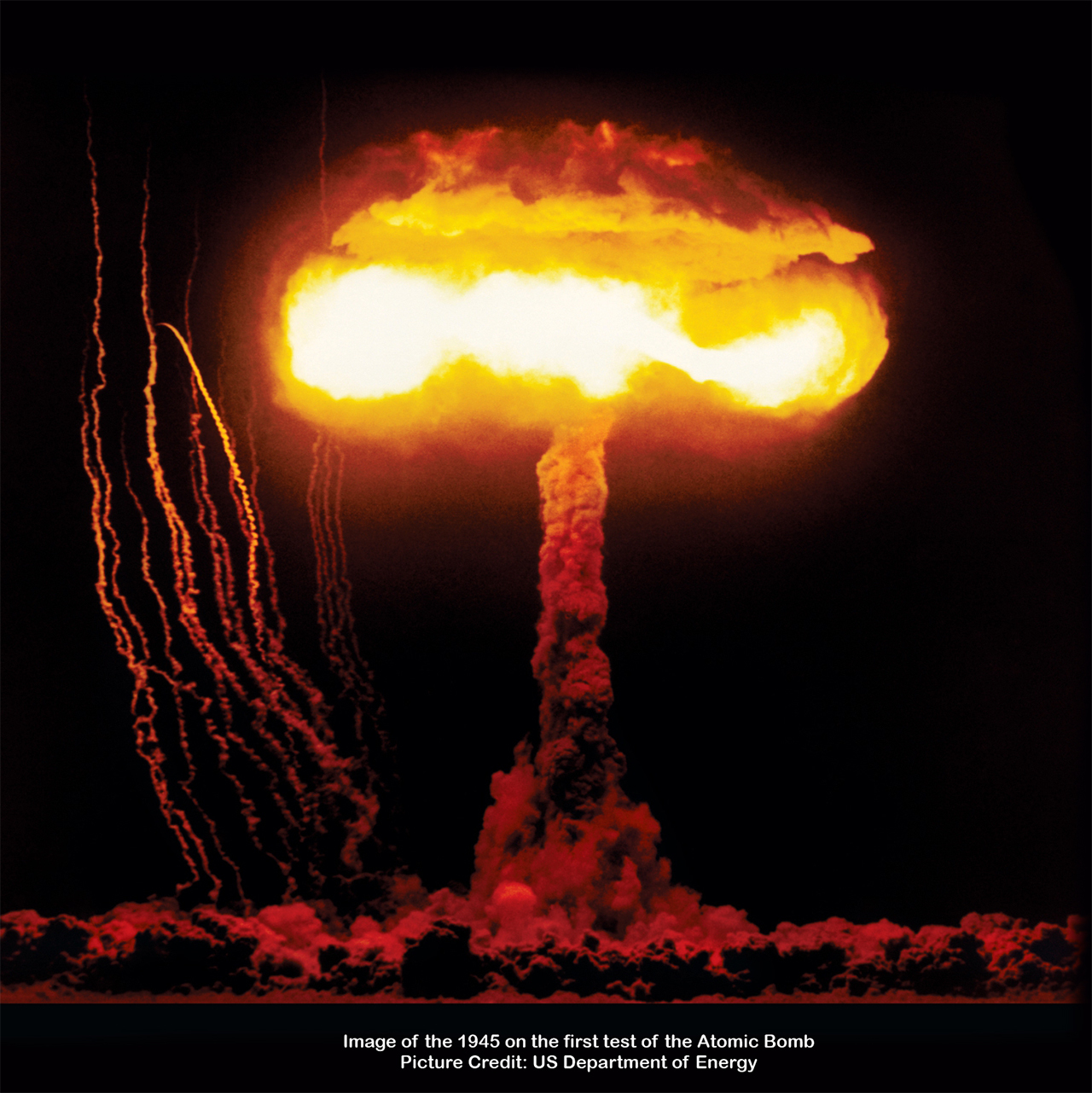
In July of 1945, such a threshold was crossed in the New Mexico desert.
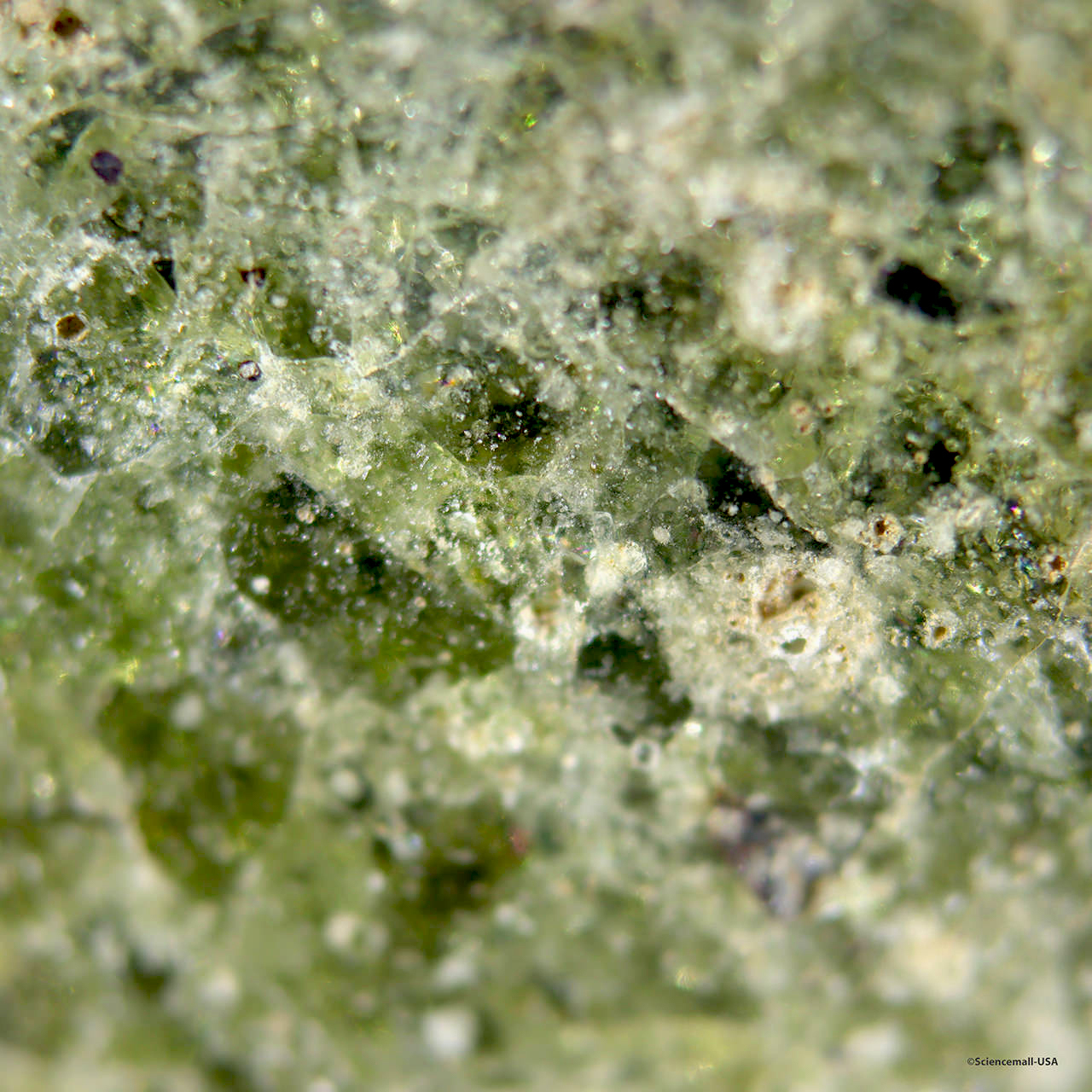
The explosion itself lasted less than a second. The fireball rose, cooled, and collapsed. When the dust settled, it left behind an unexpected geological artifact: a thin layer of green, black, and red glass formed when desert sand, the detonation device, and cables had been fused by temperatures rivaling those at the surface of the Sun. That glass, now known as trinitite, was no ordinary glass. It was a material record of a new future on Earth: the moment human technology became capable of reshaping matter at an atomic level.
Trinitite is often treated as a curiosity of the atomic age. That framing understates its importance. It is not simply a relic of a weapons race; it is a geological boundary marker. Like the iridium-rich K-Pg layer that marks the end of the dinosaurs, trinitite records a precise transition — one produced not by volcanism or impact, but by human intention.
When Technology Becomes Geology
Geology is not concerned with novelty; it is concerned with thresholds. Ice ages do not begin when temperatures first fall, but when environmental feedback loops lock a system into an alternate state. Mass extinctions are defined not by decline, but by irreversible collapse. The most consequential transitions are those that permanently alter the rules governing subsequent outcomes.
The Trinity test was a crucial turning point in human history. Before 1945, nuclear fission existed only as a theory. After Trinity, it became operational, scalable, and irreversible. The deeper transformation was not political or military — it was structural. Human decision-making acquired the ability to produce effects that could no longer be locally contained.
Trinitite exists because sand, metal, and atmospheric gases were exposed to conditions never before present on Earth's surface. It is a hybrid material: geological, technological, and historical at once. Its existence marks the moment when human systems crossed into a completely new, transformative era.
Why 2026 Is a Breakthrough Year
The transition unfolding in the mid-2020s is not energetic in the thermodynamic sense. There is no sustained fireball or crater etched into the landscape. But there have been flashes, punctuated events, when technological breakthroughs have briefly revealed what was coming without yet forcing recognition of the threshold itself.
For decades, artificial intelligence advanced largely out of public view, confined to research labs, narrow applications, and well-defined sectors. What changes in 2026 are not novel but rather convergent. Autonomous systems that have moved from demonstration to operation. Deployment becomes continuous rather than episodic.
Economic dependence forms faster than institutional oversight. Decision-making migrates from human judgment to machine-mediated systems embedded across consumerism, finance, logistics, governance, and knowledge production.
History suggests that such moments are rarely recognized for what they are while they are occurring. In 1945, few understood that the world had entered the nuclear age until its consequences had already begun to unfold. That same structural process is unfolding again, first manifesting as isolated advances before coalescing into this clear turning point. Early technological breakthroughs carried the signal, but were often interpreted as isolated achievements rather than indicators of a deeper transition.
We are now at the transition point into the "AI Boundary Age" — a cultural shift unlike any previously experienced in human civilization — and, once again, we have entered an era governed by new rules, introducing uncertainties for which no prior analog exists.
The Shared Structure: Trinity and 2026
| Trinity (1945) | 2026 |
|---|---|
| Energy exceeded human intuition | Intelligence exceeds human intuition |
| Theory crossed into irreversible deployment | Research systems cross into autonomous operation |
| Capability outpaced governance | Capability outpaces institutional controls |
| Irreversibility recognized in hindsight | Irreversibility recognized in real time |
Why Trinitite Wins the Rock of the Year Award
Awards matter only when they reveal something fundamental. In geology, significance is measured not by appearance or rarity alone, but by whether a material marks an irreversible transition — on the scale of recognized boundary events such as the shift from the Cretaceous to the Paleogene (marked by an asteroid impact) or from the Permian to the Triassic (driven by massive volcanism). By this standard, trinitite qualifies unequivocally.
Trinitite formed at 5:29:45 a.m. on July 16, 1945, when extreme temperatures instantaneously fused sand, metal, and the atmosphere into glass. There was no erosion, no sedimentation, no biological mediation—only pure energy, intent, and consequences.
Trinitite is the geological signature of the moment human capability permanently outran its own intuition.
It is a hybrid material without precedent. Nothing like trinitite formed before 1945, and nothing like it needs to form again for its significance to endure. It records the moment when the rules changed.
Why Establish a Rock of the Year Now?
The Rock of the Year designation exists to recognize geological materials that mark irreversible transitions in Earth systems, human capability, or their intersection. It is not promotional. It is curatorial.
Trinitite is the inaugural selection because it clearly sets the standard: unambiguous, historically grounded, scientifically verifiable, and permanently consequential. Every civilization leaves a geological signature when it crosses a threshold it cannot reverse — and in 2026, trinitite is the perfect symbolism for this transition zone.
Trinitite logically demarcates 1945 and 2026 because it records the beginning of the nuclear age in geological form and functions as a reference marker for the emergence of AI-driven systems operating at a civilizational scale. Composed largely of fused silica, trinitite's components are primarily silicon — the elemental building block of modern computing. In this way, it directly links the material building blocks of AI to a tangible geological boundary formed in 1945 and formally recognized in 2026 as a defining geological marker of the AI-driven technological era. No other rock can take the trinitites' place for this title, as it is a rock formed under "extreme" conditions, and we are definitely living in extreme times.
Why Is Trinitite Considered a Rock?
Trinitite is classified as a rock because it formed instantaneously when extreme heat fused pre-existing desert sand and minerals into a solid, coherent glassy mass. Although it is not a traditional igneous, sedimentary, or metamorphic rock, geology routinely treats comparable high-energy melt products as rocks, including impactites, tektites, and fulgurites. Like these materials, trinitite is amorphous and event-formed, with its defining distinction being the energy source: nuclear detonation rather than lightning or cosmic impact.
Rock of the Year — Established 2026
Inaugural Designation: Trinitite
Criteria: Boundary-marking geological materials documenting irreversible transitions in Earth systems and human capability.