
Ancient Beach Ripple Marks Flinders Ranges, South Australia
Brand : Jensan Scientifics LLC
- SKU:
- JPT-97528
- Availability:
- Usually ships in 24 hours.
- Weight:
- 6.00 LBS
- Minimum Purchase:
- 1 unit
- Maximum Purchase:
- 1 unit
- Shipping:
- Calculated at Checkout

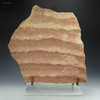



Beach Ripple Marks Plate from Melrose, Flinders Ranges, South Australia
This legally collected, scientist-sourced sedimentary plate preserves ancient beach ripple marks from the late Neoproterozoic, pre-Sturtian interval, approximately 750 million years ago (750 Ma). It captures a shallow shoreline surface from deep time - a preserved trace of moving water before the first great Sturtian Snowball Earth freeze.
Ancient Beach Ripple Marks: Geological Significance
This ripple-marked plate comes from Melrose in the Flinders Ranges, South Australia. The preserved ridges record shallow-water movement across loose sediment, likely from repeated wave action or nearshore currents along an ancient shoreline.
At approximately 750 million years old, this plate belongs to the world that existed before the Sturtian glaciation, one of the most dramatic climatic episodes in Earth's history. In that context, the phrase "the last of the warm shores before the first Snowball Earth freeze" is more than poetry - it captures the striking contrast between a familiar beach environment and the planetary-scale big "Snowball Earth" freeze that followed.
Beach Ripple Marks Plate Description
The large ancient beach ripple plate shows ripple-mark ridges preserved in low relief across its surface. Alternating reddish-brown and lighter buff bands follow the ripple geometry, giving the plate strong visual contrast and making the ancient sedimentary structure easy to read at display distance.
The surface is naturally textured, unpolished, and visibly weathered, with small areas of natural flaking and fine granular detail. The reverse side is lighter in tone and more massive in appearance, retaining a natural sedimentary texture. With a broad display face, substantial weight, and strong shoreline morphology, this is an excellent specimen for collection, teaching, or deep-time display.
| Object Type | Ancient beach ripple marks plate |
| Geological Age | Late Neoproterozoic, pre-Sturtian, approximately 750 million years ago (750 Ma) |
| Locality | Melrose, Flinders Ranges, South Australia |
| Dimensions | 240 mm L x 225 mm W x 22 mm D (9.45 in x 8.86 in x 0.87 in) |
| Weight | 1,700 grams (3.75 lb) |
| Specimen Description | Large fine-grained sedimentary plate preserving broad, parallel ripple crests in low relief; naturally banded reddish-brown and buff display face with visible weathering and strong shoreline character |
| Collection History | Legally collected, scientist-sourced material from South Australia, circa 1980 |
| What Is Included | Certificate of Authenticity, specimen tag, tag stand, and information sheet about the specimen; display stand and photo cube not included |
| Shipping | Shipping calculated at checkout |
| U.S. Shipping | Free Priority Shipping within the USA |
Images professionally photographed under controlled studio lighting using Zeiss optics and a pro-grade Canon camera.
This beach ripple marks plate is a rare deep-time display piece for collectors, educators, and science-focused interiors. It preserves a shoreline surface from an ancient world - quiet, rhythmic, and geologically meaningful - before one of Earth's greatest climatic thresholds.
Questions Commonly Asked About Ancient Beach Ripple Marks
What do these ripple marks record?
They record the movement of shallow water across loose sediment, most likely from wave action or gentle nearshore currents. After burial and lithification, that temporary shoreline texture became preserved as rock.
Why is the pre-Sturtian age important?
A pre-Sturtian age places this shoreline surface before the first major Cryogenian Snowball Earth glaciation. That gives the specimen added significance in Earth's history because it represents a shallow-water environment from the interval before extreme global ice reshaped the planet.
Are the ridges natural?
Yes. The ridges are natural sedimentary structures, not carvings or decorations. Their spacing, continuity, relief, and weathered surface texture are consistent with preserved ripple morphology in sedimentary rock.
Why do collectors value ripple-marked sedimentary plates?
Ripple-marked plates preserve an ancient surface, not just a rock type. They show a recognizable physical process - moving water shaping sediment - and allow collectors to display an actual record of ancient shoreline dynamics.
A preserved shoreline from deep time, this ancient beach ripple marks plate brings together sedimentary beauty, scientific context, and planetary deep-time dynamics. It is a tangible remnant of the warm coastal world that existed before the first Snowball Earth freeze.


