
Banded Iron Temagami Ontario Canada - 9 lb - 2.7 Ga
Brand : Sciencemall-USA
- SKU:
- JPT-96716
- Availability:
- Usually ships in 24 hours.
- Weight:
- 11.00 LBS
- Minimum Purchase:
- 1 unit
- Maximum Purchase:
- 1 unit
- Gift wrapping:
- Options available
- Shipping:
- Calculated at Checkout


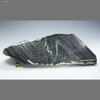
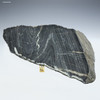
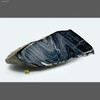


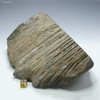
Banded Iron Formation, Sherman Mine, Temagami
This banded iron formation specimen came from the Sherman Mine at Temagami, Ontario, Canada, a historic open-pit iron mine that supplied ore to Canadian steel mills from 1968 to 1990. Formed about 2.7 billion years ago on an ancient seafloor, this large, heavy 9.67 lb (4,387 g) specimen is a physical record of Earth's oceans before the atmosphere held significant oxygen.
About This Banded Iron Formation
Banded iron formation (BIF) is a sedimentary rock made of alternating layers of iron oxide minerals and silica (chert or jasper). Temagami BIF is classified as Algoma-type, meaning it formed close to undersea volcanoes, where iron-rich bottom waters released iron that settled out in thin, repeating layers. The banding records changing conditions in an Archean ocean that had very little free oxygen.
The Sherman Mine worked two belts of this banded iron, the Northeast Arm Iron Range and the Vermilion Range, through a series of open pits. When active, it shipped over a million tons of iron pellets each year to Dofasco's steel mills in Hamilton, Ontario. Production ended in 1990, and Temagami banded iron remains a classic reference material for studying early ocean chemistry.
Product Information
| Specimen | Banded iron formation (Algoma-type) |
| Locality | Sherman Mine at Temagami, Temagami, Ontario, Canada |
| Geologic Setting | Temagami Greenstone Belt, Superior Province, Canadian Shield |
| Geologic Age | Approximately 2.7 billion years (Neoarchean Era, Archean Eon) |
| Preparation | Polished front, rough back |
| Dimensions and Weight | 27.5 cm x 9.8 cm x 12 cm; Weight: 4,387 g (9.67 lb) |
| Science Gift Options | A superb display piece for geology collectors, earth science educators, and anyone interested in Earth's early oceans and the origins of iron ore |
| What's Included | Banded iron formation specimen, Certificate of Authenticity, specimen tag, tag stand, specimen information (brass scale cube shown in photos is not included) |
| Provenance and Authenticity | All of our material is proprietary and sourced from scientists and/or verified scientific estate collections, backed by the included Certificate of Authenticity |
| Product ID | 96716 |
| Availability | One-of-a-kind; Only one available |
Images professionally photographed under controlled studio lighting using Zeiss optics and a pro-grade Canon camera, for guaranteed accuracy. The brass scale cube measures 1 cm per side.
Rarity and Significance
| Rarity | ★★★☆☆ |
| Scientific Significance | ★★★★★ |
Questions Commonly Asked About Temagami Banded Iron
What causes the stripes in banded iron formation?
The bands are alternating layers of iron oxide minerals and silica. They formed as iron and silica settled onto the seafloor in shifting amounts, likely driven by changes in volcanic and hydrothermal activity and in ocean chemistry over time.
Why does banded iron tell us about early Earth?
Iron only stays dissolved in seawater in large amounts when there is little oxygen. Thick deposits like Temagami show that Archean oceans carried abundant dissolved iron, long before oxygen built up in the atmosphere.
What does "Algoma-type" mean?
Algoma-type banded iron formed near undersea volcanoes, alongside volcanic rocks and deep marine sediments. It is generally smaller in extent than the vast Superior-type deposits that formed later on broad continental shelves.
Is the Sherman Mine still operating?
No. The Sherman Mine produced iron ore from 1968 until it closed in 1990, which makes documented specimens from this historic mine a lasting piece of Canadian mining history.
How should I display and care for this specimen?
Banded iron is a dense, durable rock that needs no special conditions. At nearly 10 pounds, it should sit on a sturdy shelf or base, and a soft cloth is all that is needed to remove dust.
Own a 2.7-billion-year-old record of Earth's ancient oceans. This is a large, 9.67-pound dynamic specimen with beautiful chevrons with contrasting bands. Terrific for a museum display or private collection.


