
Vintage Petroleum Micropaleontology Microslide - IGA
Brand : Jensan Scientifics LLC
- SKU:
- JPT-9991
- Availability:
- Usually ships in 24 hours.
- Weight:
- 1.00 LBS
- Minimum Purchase:
- 1 unit
- Maximum Purchase:
- 1 unit
- Gift wrapping:
- Options available
- Shipping:
- Calculated at Checkout


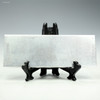


Vintage petroleum micropaleontology microslide with foraminifera
This microslide contains tiny fossil organisms collected from oilfield drilling samples, with foraminifera as the main fossils, with occasional diatoms. Foraminifera are critical tools in petroleum geology because their rapidly evolving forms and stratigraphic distributions allow geologists to correlate subsurface rock layers, interpret depositional environments, and identify conditions associated with oil-bearing strata.
IGA Microslide Context & Geological Significance
This microslide contains tiny fossil organisms collected from oilfield drilling samples, with foraminifera as the main fossil type. This is a professional oilfield slide collected during petroleum exploration work by a geological services firm active in the mid-20th century. The slide format is 60 cells (not all used) of various foraminifera. Foraminifera are the principal microfossil indicators used in oilfield studies.
The components are an aluminum-framed glass slide with a black-cell background and individually selected specimens per cell, with foot depth clearly marked. With ~60 cells, a geologist could display the key foraminifera in an interval plus supporting forms (radiolarians, diatoms, fragments). That's enough diversity to characterize a rock layer without overcrowding. With this format, micropaleontologists could organize, compare, and re-find many tiny fossils quickly while working under time pressure.
| Object Type | Oil Field Geology Microslide, Object No. 9991, #282, IGA, 191 feet |
| Geological Content | Foraminifera (individually picked per cell) |
| Origin & Context | Inter-Gulf Area (IGA) petroleum settings, Gulf of Mexico |
| Format | Professional 60-cell aluminum-framed microslide |
| Dimensions | 77 mm × 28 mm × 3 mm |
| What Is Included | Microslide; display stand; COA; the educational handout "An Example of Why Depth Matters: 143ft vs 191ft” |
| Use & Display | Micropaleontology study; petroleum geology education; historical reference |
What does IGA mean?
IGA stands for Inter-Gulf Area, a regional designation used in petroleum geology to refer broadly to Gulf Coast oilfield settings rather than a single named well or field. The term indicates that the microslide comes from a Gulf-influenced sedimentary system, where microfossils were routinely used to compare rock layers, track environmental changes, and support oilfield exploration across a wide area.
When did Oilfield Geologists Start Using Microslide Methods for Oil Exploration?
Oilfield geologists began using microslide methods in the early 20th century, with widespread adoption occurring between the 1920s and 1940s as petroleum exploration expanded rapidly. During this period, advances in microscopy and micropaleontology showed that tiny fossil organisms—especially foraminifera—could reliably indicate rock age, depositional environment, and subsurface conditions, making microslides an essential tool for correlating wells and guiding oil exploration long before drilling results were fully known.


