
Theo's Flow Komatiite — Earth Analog to Mar's Nakhlites
Brand : Sciencemall-USA
- SKU:
- JPT-841232
- Condition:
- New
- Availability:
- Usually ships in 24 hours.
- Weight:
- 1.00 LBS
- Minimum Purchase:
- 1 unit
- Maximum Purchase:
- 1 unit
- Shipping:
- Calculated at Checkout


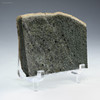



Theo's Flow Komatiite - Earth Analog to Martian Nakhlites
This rare Theo's Flow komatiite specimen comes from Pyke's Hill, Ontario, Canada, one of the strongest terrestrial analogs for the pyroxenitic Martian nakhlite meteorites. Formed in the Late Archean, it preserves a deep-time volcanic story that links Earth's hotter early mantle with planetary igneous processes studied on Mars.
Theo's Flow Geological Significance
Theo's Flow is a rare komatiitic-pyroxenitic lava flow from the Abitibi Greenstone Belt of Ontario. At approximately 2.7 billion years old (2.7 Ga), it formed during the Late Archean, when Earth's mantle was hotter and capable of producing high-magnesium, ultramafic lava compositions that are uncommon at the surface today.
What makes Theo's Flow especially important is its comparison to the Martian nakhlites, a group of clinopyroxenite meteorites from Mars. The pyroxenitic portions of Theo's Flow show petrologic and textural similarities to nakhlites, making this locality valuable for understanding how thick, crystal-rich lava flows may have formed and differentiated on another planet.
This is not a Martian meteorite. It is an Earth rock with significant scientific relevance because it provides collectors, educators, and planetary geology enthusiasts with a real terrestrial comparison point for studying Martian igneous rocks.
Theo's Flow Komatiite Specimen Details
| Object Type | Rare Archean komatiitic-pyroxenitic lava flow specimen |
| Geological Age | Late Archean, approximately 2.7 billion years old; 2.7 Ga |
| Locality | Theo's Flow, Pyke's Hill, Ontario, Canada; Abitibi Greenstone Belt, Superior Province |
| Dimensions | 67 mm H x 48 mm W x 8 mm D, No repairs |
| Weight | 62 grams |
| Scientific Significance | Terrestrial analog for studying Martian nakhlite-like pyroxenitic lava flow processes |
| Use & Display | Planetary geology display, volcanology collection, classroom teaching specimen, Mars analog study piece |
| Includes | Certificate of Authenticity, specimen tag, tag stand, detailed information sheet, and Theo's Flow comparison summary table |
| Shipping | Calculated at checkout |
Images professionally photographed under controlled studio lighting using Zeiss optics and a pro-grade Canon camera.
Rarity & Significance
| Scientific Significance: | ★★★★★ |
| Market Availability: | ★ |
| Planetary Analog Value: | ★★★★★ |
| Display Appeal: | ★★★★ |
Add Theo's Flow to your collection as a rare Archean lava specimen with direct relevance to planetary geology, Mars analog research, and the study of ancient ultramafic volcanism.
Questions Commonly Asked About Theo's Flow Komatiite
What is Theo's Flow?
Theo's Flow is an ancient layered lava flow in Ontario, Canada, known for its unusual pyroxenitic and komatiitic character. It is studied because parts of the flow resemble the igneous textures and compositions seen in Martian nakhlite meteorites.
Why is Theo's Flow compared to Martian nakhlites?
Nakhlites are Martian clinopyroxenite meteorites. Theo's Flow contains a pyroxene-rich lava-flow sequence that helps scientists compare Earth-based volcanic processes with those of igneous rocks on Mars.
Is Theo's Flow a meteorite?
No. Theo's Flow is a terrestrial rock from Earth. Its importance lies in its usefulness as an Earth analog for understanding certain Martian meteorites, not in its extraterrestrial origin.
What does komatiite mean?
Komatiite is an ultramafic volcanic rock type associated mainly with very hot mantle conditions on the early Earth. These rocks are important because they record a style of volcanism that is rare or absent in modern surface environments.
Who would value this specimen?
This specimen is especially suited for collectors of rare Archean rocks, educators teaching planetary geology, and anyone interested in the connection between Earth's deep volcanic past and Martian igneous evolution.
Theo's Flow is more than an ancient lava specimen. It is a rare bridge between early Earth volcanism and Mars analog science, preserving a planetary comparison point that can be held, displayed, and studied as part of a serious geological collection.


