
Nuvvuagittuq Faux Amphibolite Garnet [152 g ~ 4.3 Ga]
Brand : Jensan Scientifics LLC
- SKU:
- JPT-87189
- Condition:
- New
- Availability:
- Usually ships in 24 hours.
- Weight:
- 1.00 LBS
- Minimum Purchase:
- 1 unit
- Maximum Purchase:
- 1 unit
- Shipping:
- Calculated at Checkout


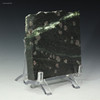



Dynamic Nuvvuagittuq Garnet Paragneiss 152 grams
This specimen contains a mixture of garnet paragneiss and faux amphibolite from the Nuvvuagittuq Supracrustal Belt, Canada. Nuvvuagittuq is a premier geological locality, with this specimen featuring terrific form and abundant ~4.3 Ga ancient garnets from Porpoise Cove.
One of Earth's Premier Geological Locations
The Nuvvuagittuq Supracrustal Belt, a geological rarity of unparalleled significance, is a treasure trove of geological wonders. Nestled in northern Quebec, Canada, and Hudson Bay, it is believed to be the oldest rock formation on ancient Earth, dating back to a staggering ~ 4.3 Ga — the Hadean. This unique belt offers an extremely rare glimpse into the early stages of rock formation on Earth, bridging the geological timeline between the Hadean and early Archean eons.
Specimen Composition and Characteristics
The volcanic-sedimentary origin of this specimen is evident in its composition. Pyrope garnets, abundant in this rock, are a testament to the intense heat and pressure it has endured over millions of years. Paragneiss indicates a sedimentary origin for a metamorphic rock. The metamorphic characteristics give this rock a truly unique and captivating appearance, sure to intrigue any geological enthusiast and make it a top-tier addition to any serious geological collection.
Details about the Nuvvuagittuq Garnets
The garnets in the Nuvvuagittuq Supracrustal Belt are particularly noteworthy. These restite garnets are deep red to reddish brown and embedded in the rock matrix. These garnets formed under extreme heat and pressure conditions, typical of the metamorphic processes that shaped this ancient rock. The garnets indicate a high degree of metamorphism, suggesting that the rock has undergone significant transformation since its formation. In some sections of the belt, garnet content can reach 50%.
Nuvvuagittuq Unique Rock Features
The traditional 'faux amphibolites' are rich in cummingtonite amphibolite composition. Unlike most dark-green amphibolites, this unique Belt features sections with a fascinating grayish-beige color, earning it the nickname 'faux-amphibolite' for its resemblance to true amphibolite. Abundant in garnets, this specimen indicates a volcanic-sedimentary origin with highly metamorphosed characteristics.
Sm-Nd anomalous values from this locality show that some protoliths in the Nuvvuagittuq Supracrustal Belt may be greater than 4.3 billion years old. Interpretation of data, like in most scientific disciplines, remains a topic of debate.
What does "faux amphibolite" mean? Researchers coined the term "faux amphibolite" due to the rock's unique composition, which is predominantly cummingtonite, an uncommon type of amphibolite.
Specimen Information
- Size of specimen: 82mm L x 77mm W x 11mm D
- Weight: 152 grams
- What is Included: Certificate of Authenticity, detailed information, specimen stand, tag, tag stand, and XRF.
- Photography: Diamond lap-polished smooth face with all-natural, rough back. This specimen was lightly sprayed for photographic purposes. Photographed under controlled lighting to reveal natural mineral contrast. As with all natural stone, visual depth varies depending on lighting conditions.
- Note: This specimen has no fractures or repairs. It is an all-natural specimen.
- Legality: Professionally and legally collected in the early 2000s.
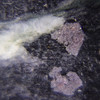
The white-and green wispy streak on both sides (one is seen up close 3×) is a classic amphibole-chlorite-quartz or feldspar band cutting through garnet-bearing amphibolite.
The foliation and banding are a result of multiple high-grade metamorphic events in these Hadean rocks, and these minerals reflect:
- Amphibolite-facies metamorphism
- Deformation and shearing
- Local metasomatism or hydrothermal overprinting
Great Geology Collection Specimen
The captivating appearance of this rock will undoubtedly make it a stand-alone showpiece. Its primitive Hadean history and unique characteristics make it a conversation starter, teaching tool, and a profound testament to the wonders of our early planet's geological history! Very low stock.


