
Idiwhaa Tonalitic Acasta Gneiss Canada [628 g ~ 4.02 Ga]
Brand : Sciencemall-USA
- SKU:
- JPT-77938
- Condition:
- New
- Availability:
- Usually ships in 24 hours.
- Weight:
- 2.00 LBS
- Minimum Purchase:
- 1 unit
- Maximum Purchase:
- 1 unit
- Shipping:
- Calculated at Checkout
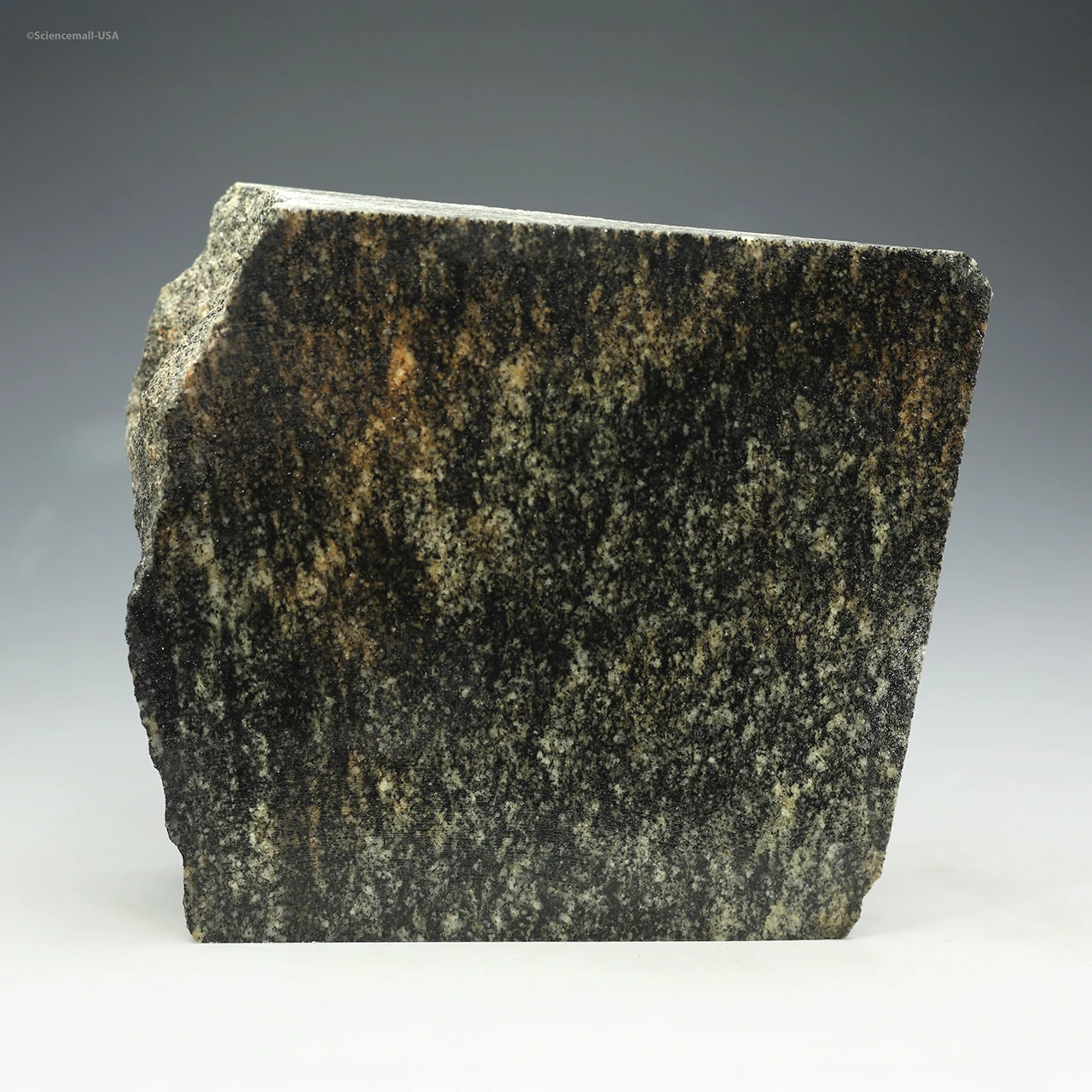


Large Idiwhaa Acasta Gneiss Canada — 628g
Step into Deep Time with this Idiwhaa Tonalitic Acasta Gneiss, an authentic geological artifact of Earth’s dawn. At nearly 4 billion years old, it captures the transition from the Hadean to early Archean—an era seldom preserved in the rock record.
This ancient gneiss stands among the earliest surviving pieces of Earth’s crust, formed only about half a billion years after our planet’s birth. Nearly one-third as old as the known universe, it offers a rare, physical connection to the Hadean and Archean eons and the foundations of Earth’s early geologic history.
Idiwhaa tonalitic acasta gneiss is found in the remote Slave Lake province, Northwest Territories, Canada, near the Acasta River, east of Great Slave Lake.
Formation
This rock formed approximately 4.02 Ga, during the Hadean and Archean Eons, based on radiometric dating of zircon crystals. The Earth's surface was highly unstable during this period, with deep convection currents bringing molten rocks to the surface.
Specimen Details
- Specimen Size: 100mm L x 88mm W x 53mm D; Weight: 628 grams. Large.
- Appearance: Photos show the front, back, and side views.
- What's Included: Ships with a Certificate of Authenticity, tag, tag stand, and detailed information about Idiwhaa Tonalitic Acasta Gneiss. Display stand and photo cube not included.
- Legality: Professionally and legally collected.
Scientific Value
The scarcity of rocks from the Hadean eon, which spans from about 4.6 billion to 4 billion years ago, is due to several key factors:
Intense Geological Activity
During the Hadean eon, Earth was extremely geologically active. Volcanic activity, tectonic movements, and impacts from extraterrestrial bodies frequently reshaped the planet’s surface. This constant reshaping meant that any early crust that formed was often destroyed or recycled back into the mantle.
- Subduction and Plate Tectonics: The process of subduction, in which one tectonic plate slides beneath another and sinks into the mantle, played a significant role in the destruction of early crust. Nearly all of the original crust from the Hadean eon has been subducted due to the movements of tectonic plates.
- Lack of Stable Crust: The Earth's surface during the Hadean was highly unstable, with deep mantle convection bringing molten rock to the surface and causing the cooling rock to sink into magmatic seas. This instability prevented the formation of a stable, long-lasting crust.
- Erosion and Weathering: Any rocks that did manage to form during the Hadean eon would have been subject to intense erosion and weathering over billions of years. This further reduced the likelihood that Hadean rocks would survive to the present day.
- Late Heavy Bombardment: Towards the end of the Hadean eon, the Earth experienced a period known as the Late Heavy Bombardment, during which a large number of asteroids and comets bombarded it. This event would have caused significant resurfacing and destruction of any existing crust.
As a result of these processes, only a few remnants of the Hadean Eon have been discovered, such as zircon grains from the Jack Hills of Australia and ancient rocks in the Nuvvuagittuq greenstone belt in Quebec, Canada.
Comparative Age
The oldest rocks known, such as those in the Nuvvuagittuq greenstone belt and the Jack Hills zircon rocks, provide context for this specimen’s significance.
Perfect for Any Serious Rock Collection
This large, striking specimen offers a remarkable gateway into early Earth history and would stand as a distinguished deep-time marker in any curated collection.


