
Glossopteris Antarctica Tree Fern Fossil – Permian
Brand : Jensan Scientifics LLC
- SKU:
- JPT-57721
- Condition:
- New
- Availability:
- Usually ships in 24 hours.
- Minimum Purchase:
- 1 unit
- Maximum Purchase:
- 1 unit
- Shipping:
- Calculated at Checkout

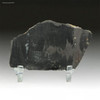


Glossopteris Antarctica Tree-Like Seed Plant — Antarctica
This beautiful Glossopteris Antarctica fossil represents one of the most iconic plants of the Permian world: a woody, tree-like seed plant that once dominated the vast swamp forests of Gondwana. These plants stood several feet tall with sturdy trunks, thick tongue-shaped leaves, and well-developed wood — forming true forests across Antarctica long before the continent froze.
A Tree-Like Seed Plant of the Permian
Glossopteris was not a fern in the modern, leafy sense. It belonged to the extinct plant group Pteridosperms, or seed ferns — woody, seed-bearing plants with upright, trunk-forming growth.
-
Pteridosperms are an extinct group of early seed plants.
-
They looked fern-like in their leaves, but
-
They reproduced using seeds, not spores.
Many Glossopteris species grew as small trees, producing dense forests across the supercontinent Gondwana. Their thick, simple leaves and robust wood show:
- Seasonal growth rings
- Annual leaf shedding is similar to that of modern deciduous trees
- Adaptation to long daylight summers and long dark polar winters
Life in Polar Forests
During the Permian, Antarctica sat farther north and supported rich wetlands and river plains. Glossopteris forests endured:
- 24-hour summer sunlight that fueled rapid growth
- Months of winter darkness that forced dormancy
- Pulsed growing seasons are recorded as annual rings in fossil wood
These fossils provided key evidence for continental drift, linking Antarctica to Africa, India, Australia, and South America.
Geological Significance
Glossopteris played a defining role in reconstructing Earth's paleogeography. Its widespread distribution across the Gondwana continents convinced early geologists that these landmasses were once joined. Its extinction around 252 million years ago — during the greatest mass extinction in Earth's history — marks a major ecological boundary, making preserved specimens especially valuable.
Description of This Specimen
Front Face
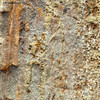
The textured surface is a pitted, porous surface consistent with the bark or outer cortex. Irregular cellular texture rather than venation (rules out leaves). It has patchy mineral infill typical of periderm and cambial zones.
The front face displays warm ochre, tan, and iron-oxide hues, with a distinct, textured fossil fabric. Rugged sculpturing with weathered ridges, pits, and branching impressions is consistent with Glossopteris Antarctica. The surface has excellent natural character and dimensionality for display.
Back Face
The back face shows a smooth, dark carbonaceous surface — the classic compression layer derived from the original woody plant material. This sleek, darker face provides a strong visual contrast with the lighter, textured front, clearly illustrating two modes of preservation in one specimen. This back face is diamond-lap-polished smooth.
Specimen Details & Provenance
- Type: Glossopteris Antarctica fossil (tree-like woody seed fern)
- Age: Permian Period (approx. 299–252 million years old)
- Locality: Fremouw Peak Area, Queen Alexandra Range, Antarctica
- Size: 82 mm L × 44 mm W × 12 mm D
- Condition: Natural coloration; front surface lightly lap polished for clarity
- Both sides are terrific for microscopic study!
- Included: Certificate of Authenticity, tag, tag stand, and Scientific Article titled: Glossopteris Antarctica: Botanical Identity, Paleoecology, and the Antarctic Record at Fremouw Peak
- Legally collected in the 1980s. Description: Fossil Specimen: Glossopteris (Extinct Flora). Legally collected in Antarctica, circa 1980. Part of a legacy scientific collection. Not restricted by the Madrid Protocol (Pre-1991 collection).
Why Collectors Value Glossopteris
- Key fossil in the discovery and confirmation of continental drift
- Represents an extinct lineage of woody, seed-bearing tree-like plants
- Powerful educational value across many geological disciplines for paleobotany and deep-time Earth history
- Visually expressive specimen with two contrasting display faces
- Glossopteris became a cornerstone of the continental drift theory — first proposed by Alfred Wegener — because its identical Permian seed-fern fossils are found across Antarctica, Australia, India, South Africa, and South America—landmasses now separated by oceans. Its heavy seeds could not cross marine barriers, meaning these continents must have been physically connected when Glossopteris forests thrived. This unmistakable distribution pattern helped scientists validate Gondwanaland and provided early, compelling evidence that continents move over geological time.
Add This Glossopteris Antarctica Forest Relic to Your Collection
This Glossopteris specimen is a rare opportunity to own part of a Permian polar forest — a scientifically important, visually dynamic fossil from one of Earth's most intriguing ancient ecosystems. Add this fantastic specimen to your geology collection today and enjoy a genuine piece of Gondwana's Antarctica deep botanical past!


