
Eospermatopteris "Gilboa Tree" Earliest Fossil Forest
Brand : Sciencemall-USA
- SKU:
- JPT-17738
- Availability:
- Usually ships in 24 hours.
- Weight:
- 1.00 LBS
- Minimum Purchase:
- 1 unit
- Maximum Purchase:
- 1 unit
- Shipping:
- Calculated at Checkout


Includes an educational geology video documenting this rare Eospermatopteris Gilboa Fossil Forest specimen from New York.
Eospermatopteris "Gilboa Tree" Fossil – New York
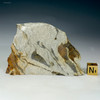
Own an important specimen from one of Earth's first forests. This remarkable specimen of Eospermatopteris (popularly known as the Gilboa Tree) originates from the world-renowned Schoharie County locality in New York. Dating back approximately 385 million years, this section of fossilized trunk material showcases the unique vascular architecture that allowed these ancient plants to become the world's first "skyscrapers."
The specimen features distinct carbonaceous compressions and dark organic traces set against a classic Devonian silty sandstone matrix. Touches of ferruginous (iron-oxide) staining provide a beautiful contrast, highlighting the complex internal "nested straw" structure that predates modern woody trees.
The Architectural Marvel of the Cladoxylopsids
Unlike the solid woody core of a modern Oak, Eospermatopteris utilized a sophisticated "experimental" anatomy. The trunk was composed of hundreds of individual vascular strands—each containing its own xylem and phloem. These vertical bundles acted like natural rebar, providing the structural integrity needed to support a crown of branchlets 30 feet in the air. This specimen offers an interesting perspective on the primitive vascular patterns that shaped our planet.
A Witness to the Devonian Explosion
Before the Middle Devonian, terrestrial life was largely restricted to low-growing mosses and liverworts. The emergence of Eospermatopteris marked a pivotal moment in evolution known as the Devonian Explosion. As they grew taller, these plants formed the first forest canopies, significantly reducing atmospheric CO2 and cooling the Earth. This specimen represents the beginnings of the modern terrestrial ecosystem.
Authentic Specimen from Gilboa, New York
This specimen was sourced from the famous riverside sites near Gilboa, New York. For over a century, these New York quarries have provided the primary evidence for the world's earliest complex ecosystems. This specimen is a unique artifact of New York's deep geological history, preserved in the fine-grained sandstones of the Catskill Delta.
How does Eospermatopteris compare to modern trees in scale?
While Eospermatopteris was a giant for its time, its growth strategy was very different from the trees we know today. Because it lacked a "secondary growth" cambium (the layer that makes trees thicker every year), it had to be much wider at the base to stay upright.
| Entity | Typical Height | Structural Method |
|---|---|---|
| Silurian Land Plants | 2–5 Inches | Simple Turgor Pressure |
| Eospermatopteris | 26–33 Feet | Bundled Vascular Strands |
| Modern Oak Tree | 50–80 Feet | Solid Lignified Wood |
| Giant Sequoia | 250+ Feet | Advanced Secondary Xylem |
Perfect for Collectors and Educators
This fossil is an ideal display piece for those interested in paleobotany, geology, or natural history. Its clear organic details and historical significance make it a standout addition to any collection or a powerful teaching tool for explaining plant evolution.
Product Specifications
| Scientific Name | Eospermatopteris (Goldring) |
| Size | 3 1/2" L X 2" H X 2 1/8" D |
| Age | Middle Devonian (Approximately 385 Million Years Ago) |
| Location | Gilboa, Schoharie County, New York, USA |
| Collection Status | Legally Collected |
| What is Included | Certificate of Authenticity, Tag, Tag Stand, and Detailed Specimen Information |
It wasn't an overnight "jump," but in geologic terms, the Devonian Explosion was incredibly fast—a period of about 20 million years where plants went from ankle-high to skyscraper-high.
This rapid "upward race" was driven by three revolutionary "biological inventions" that allowed plants to overcome gravity and dehydration:
- The Invention of Lignin (The "Steel" of the Plant World)
Early plants were held up by water pressure (turgor), like a garden hose. If they got too tall or the water dried up, they wilted.
- The Breakthrough: Plants evolved the ability to produce lignin, a complex organic polymer that is incredibly stiff and decay-resistant.
- The Result: Lignin "armored" the cell walls of the xylem. This meant the plant could remain upright even without water pressure, providing the structural framework needed to resist gravity.
- The "Plumbing" Revolution (Advanced Xylem)
A 5-inch plant can move water through simple osmosis. A 26-foot tree cannot.
- The Breakthrough: Plants developed tracheids—specialized conducting cells in the xylem. These are essentially hollow, reinforced tubes that use "transpiration pull" (the evaporation of water from the top of the plant) to suck water up from the roots like a giant straw.
- The Result: This allowed Eospermatopteris to stay hydrated at the crown while its roots were deep in the Devonian mud.
- The Competition for Sunlight (The Evolutionary "Arms Race")
The primary driver for this growth was competition.
- The Breakthrough: Once plants began to carpet the earth, the ones on the bottom were shaded out and died.
- The Result: Evolution favored any mutation that allowed a plant to be even an inch taller than its neighbor. This created a positive feedback loop: being taller meant more sunlight, which meant more energy, which fueled even more growth.
The "Experimental" Design of Eospermatopteris
What makes this specimen so fascinating is that it shows an intermediate step in this race. Instead of the "solid wood" strategy used by modern trees, Eospermatopteris used a "nested straw" strategy. It bundled hundreds of individual vascular strands together. It was a brilliant, albeit complex, way to reach 30 feet before "true wood" (the vascular cambium) had fully developed later in the Devonian, with trees like Archaeopteris.Add a specimen of Gilboa "First Forest" to your collection. Fossils of Eospermatopteris are more than just ancient rocks; they are the architectural blueprints of the terrestrial world. Every modern forest you walk through today owes its existence to the biological "breakthroughs" locked inside this ancient forest.


